Harrisburg & Central PA
Mature Trees and Roof Damage in Harrisburg's Older Neighborhoods
Falling limbs are the dramatic version. The expensive version is the branch that has been resting on your shingles for four years.
The short answer
Trees damage roofs three ways, and only one is dramatic. Impact strikes are the obvious version. Abrasion from a resting branch quietly sands the granules off in an arc. And constant organic debris holds moisture in valleys and gutters. The middle one costs the most and gets noticed least.
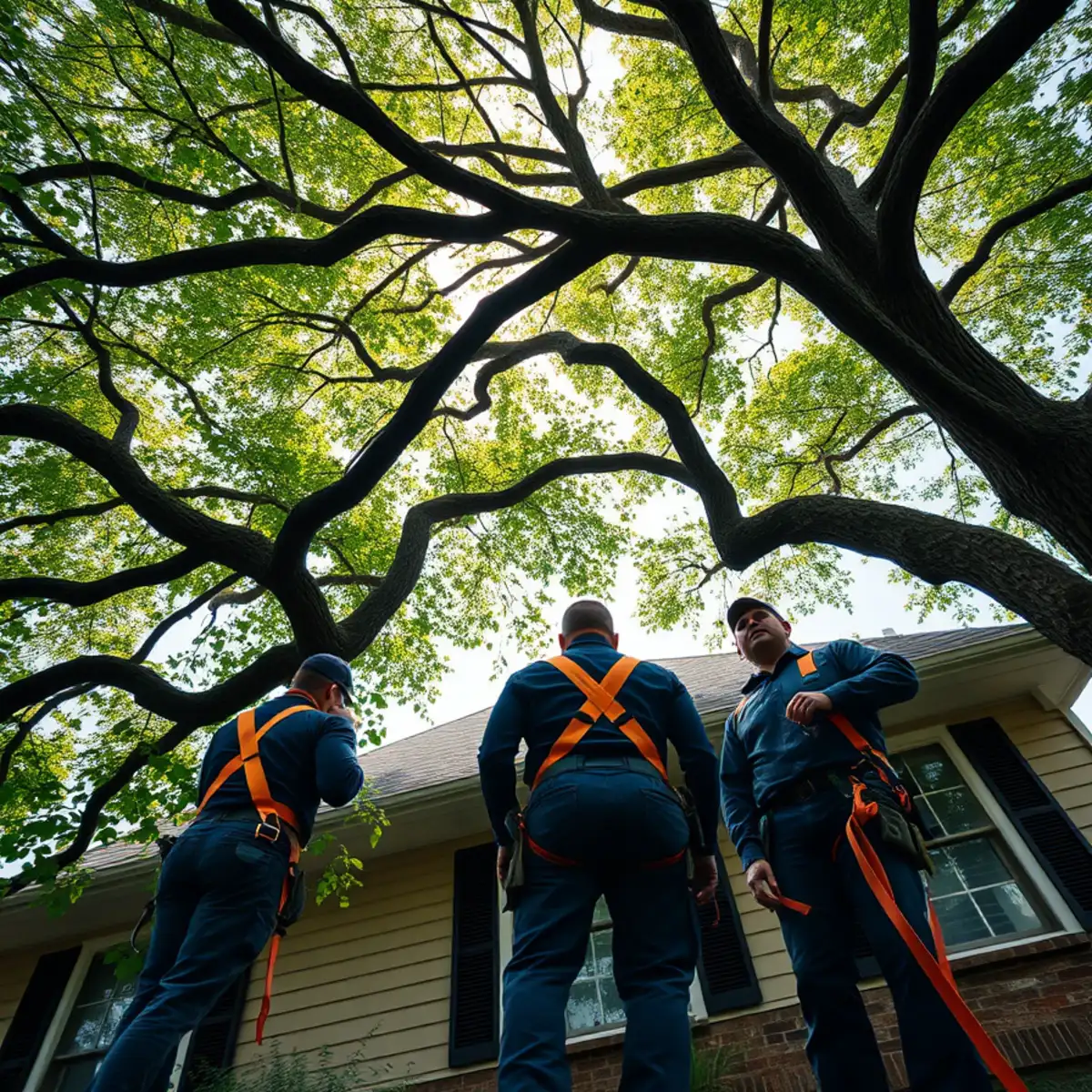
The mature canopy in Riverside, Bellevue Park, Paxtang, Camp Hill and the streets around Reservoir Park is one of the best things about living in those neighborhoods. It is also, from a roofing perspective, a slow and persistent adversary.
Trees damage roofs three distinct ways, and only one of them is the dramatic one people think about.
Damage 1: impact
The obvious one. A limb or a whole tree comes down and punches through the roof.
It is also the least common and, oddly, the most straightforward to deal with. It is unambiguous, it is clearly a covered insurance event, and the repair scope is defined by the damage.
What matters is the response: do not climb, do not move the limb — it may be holding a damaged section in place — photograph everything before anything is touched, and sequence the tree crew and the roofers together so the opening is tarped the same day. Full guidance in what to do when a tree falls on your roof.
Damage 2: abrasion — the expensive quiet one
A branch resting on or lightly touching a roof does not need to fall to cost you money.
Every time the wind moves, that branch sweeps across the shingles. It is a slow sanding action, and over several seasons it removes the granules from the contact path entirely. Underneath, the asphalt is then exposed to direct ultraviolet light and ages several times faster than the rest of the roof.
The wear pattern is unmistakable once you know it: a clean arc or stripe of granule loss following the branch's arc of movement. We find it constantly on Riverside and Bellevue Park roofs, and homeowners are almost always surprised, because the branch looked harmless.
The fix is trimming. Anything touching or overhanging the roof plane should come back. It is inexpensive relative to the roof it protects.
Damage 3: debris
The constant one. Leaves in autumn, maple seeds in May, needles, twigs, catkins and seed pods year-round.
Where it accumulates matters. In gutters, it blocks drainage and creates overflow, which rots fascia and feeds ice dams. In valleys, it holds moisture directly against the roof surface and prevents drying. On low-slope sections, it dams water and creates ponding where there was none.
Organic debris also composts. Given a season in a valley or a gutter, it becomes soil, and given two, things grow in it.
What a canopy neighborhood actually needs
- Gutter cleaning three times a year, not two — late spring after the seeds drop, mid-autumn, and again once the trees are bare
- Valley inspection annually — valleys collect what the wind moves and they are where roofs concentrate water
- Limb clearance from the roof plane, ideally with several feet of separation
- Algae-resistant shingles on shaded north slopes at the next replacement — copper-containing granules inhibit the streaking
- Larger gutters and 3x4 downspouts where the debris load justifies it
- Fine micro-mesh guards where tree cover is heaviest, understanding they reduce cleaning rather than eliminate it
Shade, moisture and moss
Heavy canopy means a roof that dries slowly. North-facing slopes under trees can stay damp for days after rain, which encourages algae streaking and, in the worst cases, moss.
Moss is more than cosmetic. It holds water against the shingle continuously and its rhizoids work into the seams between shingles, lifting them slightly. Over time that is a genuine water path.
The remedies are trimming to increase light and airflow, and zinc or copper strips installed near the ridge so rainwater carries trace metal ions down the slope. Never pressure wash a shingle roof to remove moss — you will strip granules and drive water under the courses.
Deciding whether a tree should come down
We are roofers, not arborists, and we will not tell you to remove a healthy hundred-year-old oak. But we do see the aftermath, and there are signals worth having a professional look at.
Dead limbs in the crown, particularly large ones over the house. Visible fungal bodies at the base or on the trunk. A noticeable lean that has changed. Heaving soil on one side of the root plate. Cracks or cavities in a major union.
An arborist assessment is cheap relative to a limb through a roof, and a documented pre-existing hazard also matters if a neighbor's tree is the one in question.
What this means for your roof
In Riverside, Bellevue Park, Paxtang and the streets around Reservoir Park, the canopy is part of why people live there. It is also why gutters here need clearing three times a year rather than twice and why valleys deserve an annual look.
Get limbs back from the roof plane — anything touching it is wearing your shingles out every time the wind moves. And after any significant storm, get the roof checked rather than assuming a clear yard means a clear roof. See 24/7 emergency roof repair.
Questions we get about this
Should I remove a tree that overhangs my roof?
Not usually — trimming is nearly always enough, and a mature tree is worth keeping. Removal becomes the conversation when an arborist finds dead limbs in the crown over the house, fungal bodies at the base, a lean that has changed, or heaving soil at the root plate.
Can moss on a roof cause real damage?
Yes, beyond appearance. Moss holds water against the shingle continuously and its rhizoids work into the seams between courses, lifting them slightly. Never pressure wash it off — that strips granules and drives water under the courses. Trimming for light and zinc or copper strips near the ridge are the right fixes.
Who pays if my neighbour's tree falls on my roof?
In most cases your own homeowners policy responds first, and your insurer may then pursue your neighbour's carrier where negligence can be shown — a tree they were already on notice was dead, for example. Do not delay your own claim while fault is being sorted out.
Need help with this in Harrisburg?
We are a licensed and insured roofing contractor based at 1000 N Cameron St in Harrisburg. Free inspections, written reports and honest recommendations.
Related services
Areas mentioned