Harrisburg & Central PA
Roofing in Harrisburg's Historic Districts: Rules for Olde Uptown & Bellevue Park
Historic review is far less painful than homeowners expect. Applications fail for missing documentation, not for the work itself.
The short answer
Work visible from the public right of way in a designated district may require review before it starts. Olde Uptown is designated. Like-for-like repair is generally straightforward — applications are held up far more often for insufficient documentation than for the substance of the work.
Owning in a Harrisburg historic district comes with a step most homeowners never encounter: exterior work visible from the public right of way may need review before it starts.
That prospect makes people anxious, and in our experience it should not. Like-for-like repair is generally straightforward. What actually causes delay is incomplete submissions — vague descriptions, no photographs, no material specification.
Here is what to expect and how to make it go smoothly.
First: find out whether it applies to you
Olde Uptown is a designated historic district. Other Harrisburg neighborhoods — including Bellevue Park, parts of Midtown and Shipoke — have strong historic character and may carry their own designations, overlays or covenants.
The reliable step is to check with the City of Harrisburg's planning and codes staff about your specific address before you start. Ask two questions: is my property in a designated district, and does the work I am planning require review?
Do this before you sign a contract. Finding out mid-project is where the genuine problems start.
What review generally cares about
- Material — slate replaced with slate, metal with metal. Substituting asphalt for slate on a visible elevation is the most common point of contention
- Color and texture — a match in tone and surface, not just material type
- Profile and dimension — slate size and exposure, panel width on standing seam, cap profile
- Visible metalwork — copper versus aluminum on flashing, gutters and cornice detail
- Architectural features — cornices, brackets, finials, dormer detailing retained or replicated rather than removed or wrapped
- What is actually visible — rear elevations not seen from the street are frequently treated with more latitude
Building a submission that gets approved
Photograph the existing condition thoroughly
Wide shots of each affected elevation plus close-ups of the material, the failure and any detail being repaired. This is the single most important element.
Describe the existing material specifically
Not 'slate roof' but the slate type, approximate size and exposure, and the flashing metal. Say what you know and say plainly what you do not.
Specify the proposed material precisely
Manufacturer and product where applicable, dimensions, color, finish, and how it matches what is there.
Provide a sample where color matters
A physical sample resolves questions that photographs cannot.
Explain the scope of intervention
Repair versus replacement, how much original material is being retained, and where replacement material will go. 'Retaining all sound original slate; harvesting matching slate from the rear slope for the front elevation' is a sentence reviewers like.
Allow time
Review has a calendar. Start it before you need the work done, not after a leak forces the issue.
Emergency work in a district
If a storm has opened your roof, protect the building. Emergency stabilization — tarping, temporary covering — is about preventing further loss to a historic structure and no reasonable review process penalizes it.
Document what you did and why, notify the city promptly, and then go through the normal process for the permanent repair. Photographs of the damage before the tarp went on are important here for the same reason they matter to an insurer.
Why the rules exist, practically speaking
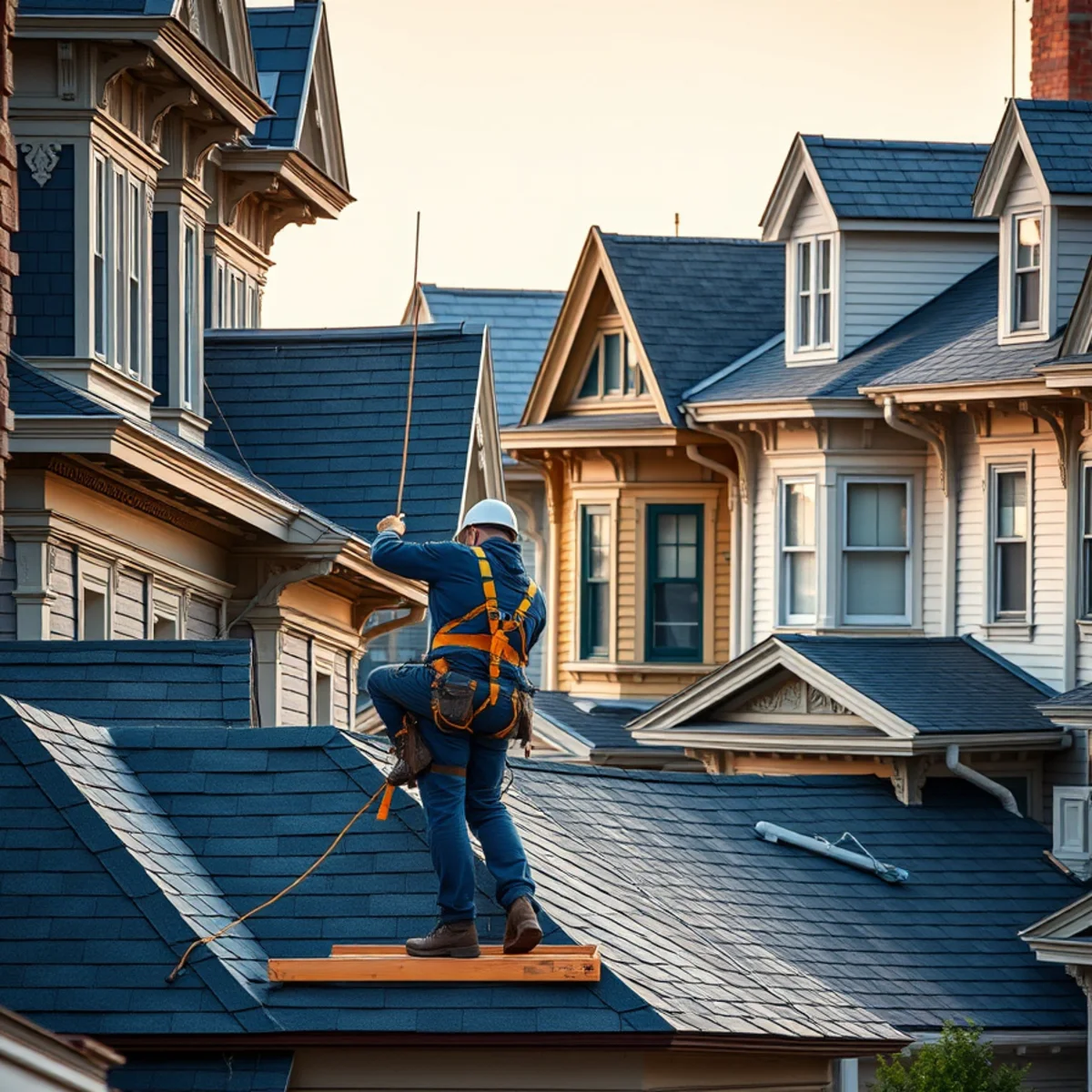
It is not aesthetics for its own sake. District designation exists because collective character is what gives these neighborhoods their value, and that character is a shared asset that any individual owner can degrade.
One asphalt roof on a slate block does not just affect that house. It is visible from every window on the street, and it establishes a precedent. The regulation is essentially a mechanism for holding a collective agreement together.
It also protects you. If you have invested in restoring a slate roof, the rules are what stop the value of that investment being eroded by the neighbors.
The financial argument for doing it properly
Preservation-standard work costs more per square than an asphalt tear-off and lasts several times as long. Over fifty years, an asphalt roof on a Victorian is two replacements — two tear-offs, two disposals, two full staging setups on a steep roof.
There is also the resale factor. In Olde Uptown and Bellevue Park, original slate and intact cornice detail are part of what buyers are paying for.
How we approach the work, and the documentation we produce for review, is on our historic and slate roof restoration page.
What to do next
Check with the City of Harrisburg about your specific address before you sign a contract, not after. Finding out mid-project is where the genuine problems start, and a contractor who does not ask the question is not one you want on a historic roof.
Then build the submission properly: thorough before-photographs, a specific description of existing and proposed material, and samples where colour matters. That documentation doubles as your permanent record for resale and insurance. See historic and slate roof restoration.
Questions we get about this
Which Harrisburg neighbourhoods have historic protections?
Olde Uptown is a designated district. Other areas including Bellevue Park, parts of Midtown and Shipoke carry historic character or overlays that may affect exterior work. The only reliable answer is address-specific, so check with city planning rather than assuming from the street.
Can I do emergency roof work in a historic district?
Yes. Protecting the building comes first and no reasonable review process penalises emergency stabilisation. Document what you did and why, photograph the damage before covering it, notify the city promptly, and go through the normal process for the permanent repair.
Does historic review make a roof more expensive?
The review itself does not, but the standard it holds you to can. Matched slate and copper flashing cost more than asphalt and aluminium. Across fifty years the comparison usually reverses, because you are buying one roof rather than two or three.
Need help with this in Harrisburg?
We are a licensed and insured roofing contractor based at 1000 N Cameron St in Harrisburg. Free inspections, written reports and honest recommendations.
Related services
Areas mentioned