Roof Problems Explained
Why Your Asphalt Shingles Are Curling — and What It Means
Curling, cupping and clawing look similar from the driveway and mean three different things. The distinction tells you whether it is age, ventilation or a defect.
The short answer
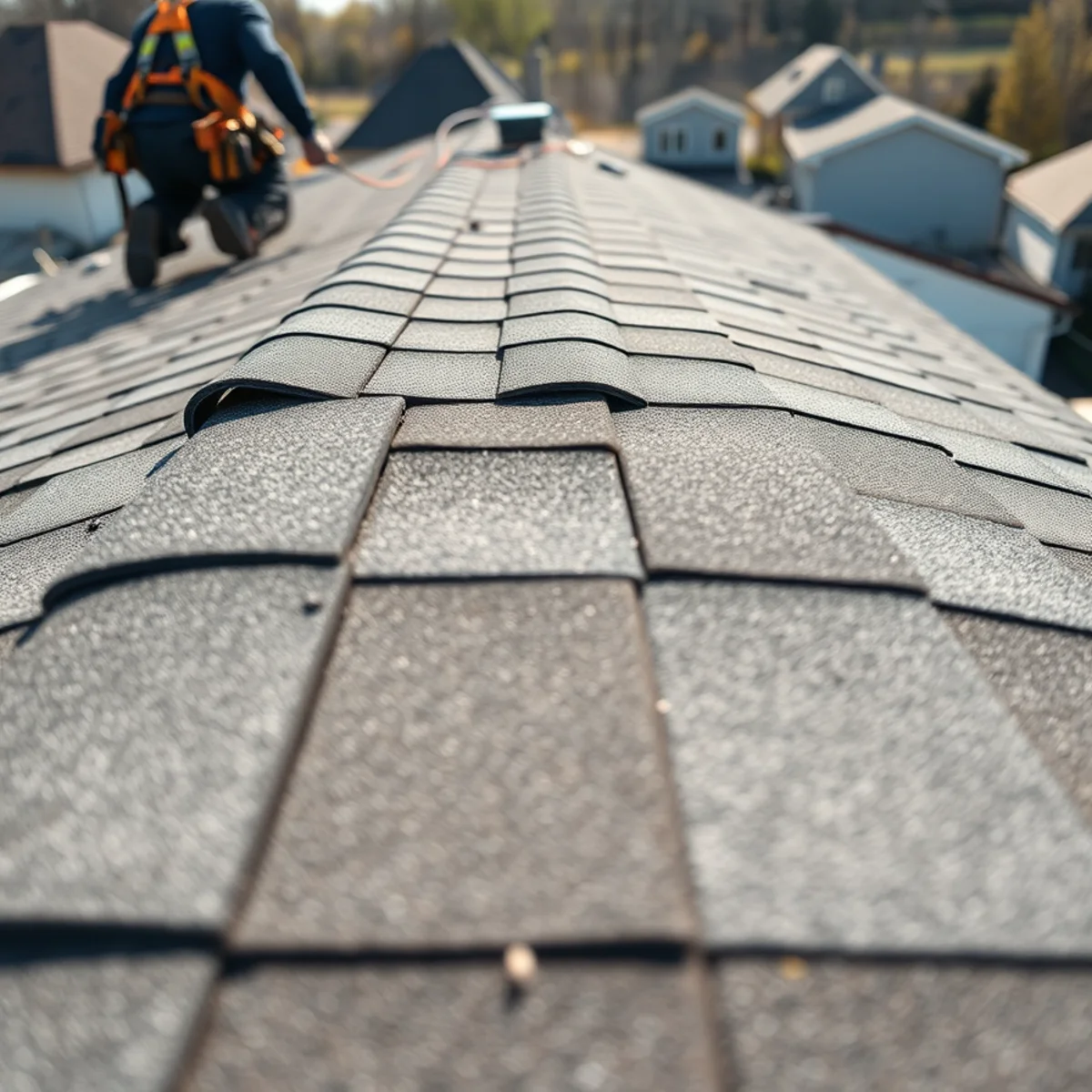
Curling means the edges lift away from the deck — usually age, heat from below, or moisture in the sheathing. Cupping, where the centre rises, almost always means trapped attic moisture. Clawing, where the centre stays down and the edges claw up, is age plus deck movement. The shape tells you the cause.
Shingles are supposed to lie flat. When they stop, the shape they take tells you why — and the diagnosis matters, because two of the three causes are things you can still act on.
Here is how to read your own roof from the ground with a pair of binoculars.
The three shapes and what each means
Cupping is the most useful diagnosis because it points to a fixable mechanism. It happens when moisture from the attic side works into the shingle mat, expands it unevenly, and pushes the middle up.
| Shape | What it looks like | Usual cause |
|---|---|---|
| Curling | Edges lift up away from the roof | Age, heat from below, or moisture in the deck |
| Cupping | Center rises, edges stay down | Trapped moisture — almost always attic ventilation |
| Clawing | Center stays down, edges claw upward | Age plus underlayment or deck movement |
Cause 1: attic heat and moisture
This is the leading cause in Central Pennsylvania and it is why so many 1980s and 1990s roofs in Lower Paxton Township and Susquehanna Township failed years early.
The pattern: a ridge vent was installed, but the soffits were either never vented or were later packed shut with blown-in insulation. Without intake air, a ridge vent cannot move anything. The attic then runs extremely hot in humid July, cooking the adhesive out of the shingle from underneath, and holds moisture in January, which frosts the sheathing and then soaks into everything when it melts.
You can check this yourself. Go into the attic on a hot afternoon. If it feels dramatically hotter than outside and there is no perceptible airflow at the eaves, that is your answer. Full explanation in attic ventilation: the hidden killer of builder-grade roofs.
Cause 2: age
Asphalt shingles are a mat saturated with asphalt and surfaced with granules. Over decades the volatile components in the asphalt migrate out and the shingle loses flexibility. A stiff shingle cannot lie flat over a deck that expands and contracts through Central PA's temperature swings, so it curls.
Age-related curling is usually uniform across whole slopes and accompanied by granule loss. There is no repair; it is a replacement conversation.
Cause 3: installation problems
- Installed over a second layer — the new shingles follow every irregularity of the old ones and never lie flat
- Nailed too high, above the nail line — the shingle is not held at its designed point and the tab lifts
- Overdriven nails — the head cuts into the mat and the shingle deforms around it
- Wet or unseasoned deck at install — sheathing dried and shrank afterward, moving everything on top of it
- Mixed product batches — occasionally a manufacturing issue, which is a warranty claim rather than a roofing one
Does curling mean you are leaking?
Not necessarily, and not yet. A curled shingle is still shedding most water. What it has lost is wind resistance — the lifted edge is exactly what a gust needs to get under, and in a wind-channeling valley like ours that is how a slope unzips.
It also means water can be driven up under the courses in wind-driven rain, which is a different failure mode from a hole and produces intermittent leaks that only appear in storms from a particular direction.
Can curled shingles be fixed?
Individually and temporarily, yes — a curled shingle can be sealed down with a compatible roofing adhesive. On a handful of shingles in an otherwise healthy roof that is a legitimate repair.
Across a whole slope it is not. The underlying cause is still present, the shingles are already deformed, and the adhesive is fighting the material's own stiffness. You are buying a season.
If ventilation is the cause and the roof is otherwise young, correcting the ventilation stops the progression and is worth doing on its own merits — it also protects whatever roof goes on next.
What to do next
Get an inspection that includes the attic, not just the roof. Any assessment of curling shingles that does not include an attic ventilation check is incomplete, because in this region ventilation is the most likely cause.
If replacement is the answer, make sure the new scope includes correcting the intake — otherwise the new roof repeats the old one's history. See asphalt shingle roofing for how we specify it.
What this means for your roof
Curled shingles are a wind-resistance problem before they are a leak problem. The lifted edge is exactly what a gust needs, and in a valley that channels wind the way ours does, that is how a slope unzips in a single front.
If the cause is ventilation and the roof is otherwise young, correcting the intake stops the progression and protects whatever roof goes on next. Any inspection for curling that does not include an attic check is incomplete — see asphalt shingle roofing.
Questions we get about this
Can curled shingles be glued back down?
Individually and temporarily, yes — a handful on an otherwise healthy roof is a legitimate repair. Across a whole slope it is not: the underlying cause is still there, the shingles are already deformed, and the adhesive is fighting the material's own stiffness.
Do curling shingles mean the roof is leaking?
Not necessarily, and not yet. A curled shingle still sheds most water. What it has lost is wind resistance, plus the ability to stop wind-driven rain being pushed up under the courses — which produces intermittent leaks that only appear in storms from one direction.
How long do curling shingles have left?
It depends whether the cause is age or ventilation. Age-related curling across whole slopes with granule loss is a replacement conversation now. Cupping on a younger roof may have years left if the attic problem is corrected.
Need help with this in Harrisburg?
We are a licensed and insured roofing contractor based at 1000 N Cameron St in Harrisburg. Free inspections, written reports and honest recommendations.
Related services
Areas mentioned