
Cost & Insurance
Flat Roof Replacement Cost for Harrisburg Rowhomes
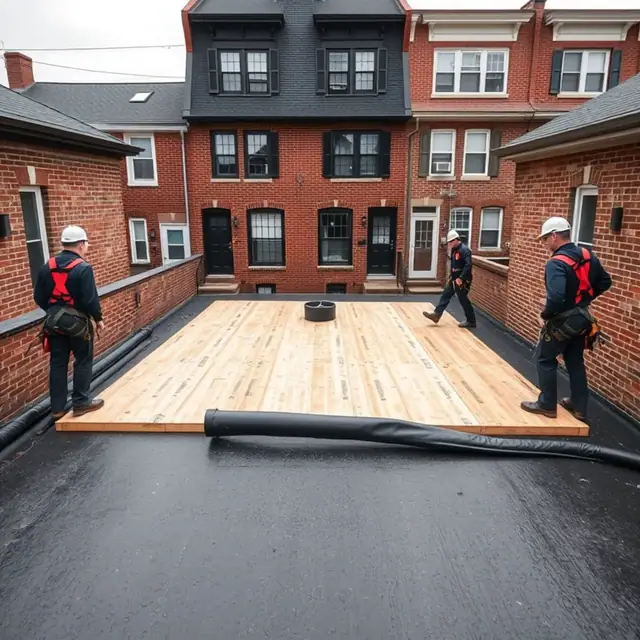
Two identical rowhome roofs can differ in price by half, and the reason is almost never the membrane. It is what is underneath it.
February 11, 2026 · 8 min read
Same-day emergency response across Harrisburg· Licensed & insured · Free written estimates
1000 N Cameron St, Harrisburg, PA 17103
Core Roofing Services
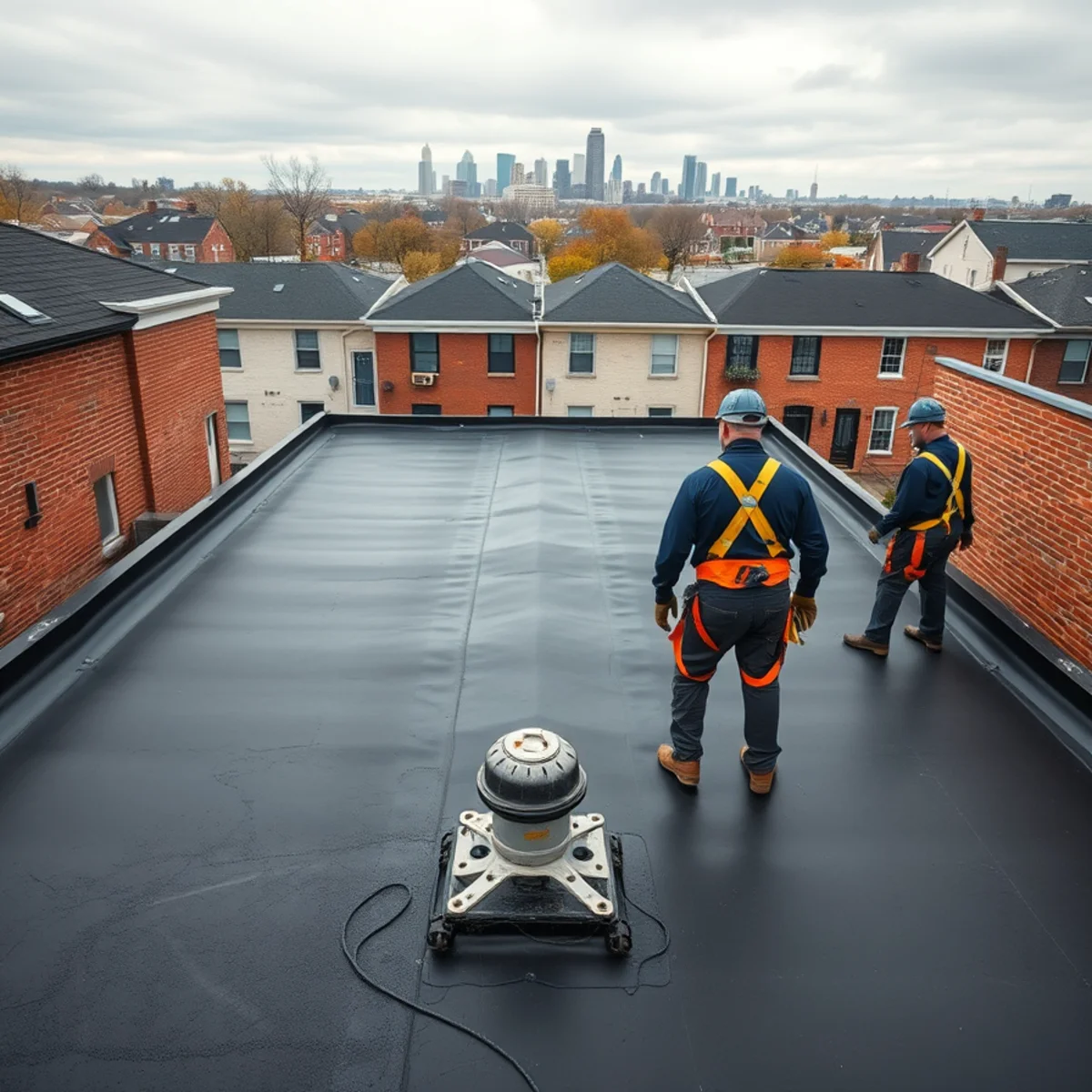
EPDM, TPO and modified bitumen for the rowhome rear sections, porch roofs and additions that shingles were never made for.
Serving Harrisburg & Dauphin County · 1000 N Cameron St, Harrisburg, PA 17103
24/7 emergency response
A person answers, day or night.
Based on N Cameron St
Local crews, not storm chasers.
Licensed & insured
Liability and workers' comp on every job.
Free written estimates
Itemized line by line, photos included.
Harrisburg is a flat-roof city whether homeowners realize it or not. Walk any block in Allison Hill, Midtown or Camp Curtin and most of what you cannot see from the sidewalk is low-slope: rear kitchen additions, second-floor porch decks, bay window caps, and the back half of countless rowhomes.
Those surfaces fail differently than a shingle slope. Water does not run off — it sits. It finds the one seam that was rolled cold, the one termination bar that was never sealed into the parapet, the one drain that has been packed with maple seeds since 2019. Then it travels between the ceiling joists and shows up in a room three units over.
We repair and replace low-slope roofs across the city every week, and we detail them the way a flat roof has to be detailed: mechanically terminated, properly lapped, and pitched so the water leaves.
If your rear addition or rowhome roof shows any of these, water is already getting in somewhere.
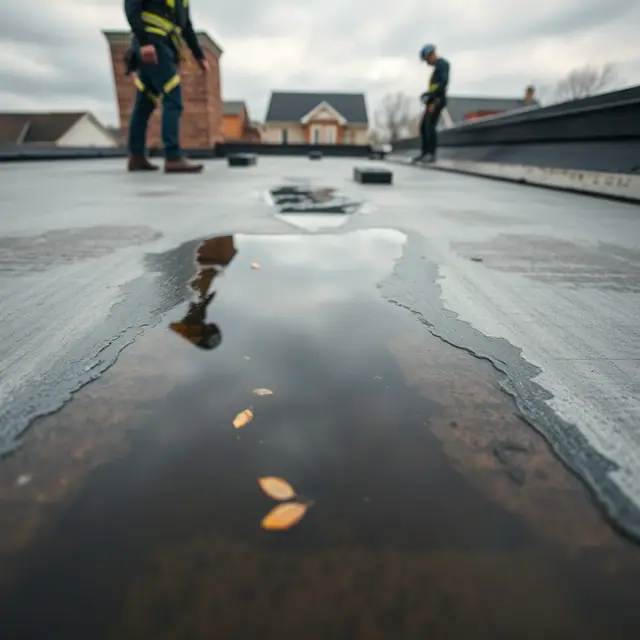
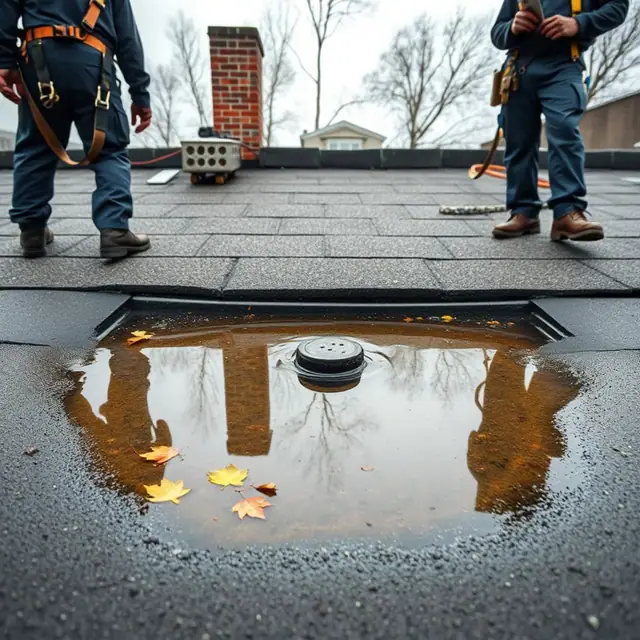
Standing water 48 hours after rain means the deck has sagged or the drainage was never right. Ponding accelerates membrane breakdown and doubles the load on that section of framing.
Seams are where flat roofs fail. Thermal cycling pulls them, and a seam rolled in cold weather never fully bonded in the first place.
On rowhomes the membrane has to turn up the party wall and terminate under counterflashing or a term bar with sealant. When that detail is skipped, every rain runs behind the membrane.
A single clogged scupper on a rowhome turns the whole roof into a shallow pool. We clear them and install strainers so it does not recur.
Trapped moisture under the sheet expands in the sun. Blisters eventually split, and a split blister is an open hole.
The cracked-mud pattern on old built-up and coated roofs means the surfacing has oxidized and lost all flexibility. Recoating over it buys a season at best.
For a typical Harrisburg rowhome rear section we most often specify EPDM or a two-ply modified bitumen. Both handle the freeze-thaw swing, both detail cleanly into a party wall, and both are repairable by any competent roofer in ten years — which matters more than people think.
TPO earns its place on larger commercial decks where the reflective surface actually moves the cooling bill. That work is covered on our commercial roofing page.
| System | Where it fits | Strengths | Watch-outs |
|---|---|---|---|
| EPDM (rubber) | Residential rear sections, porch roofs, small commercial | Handles Central PA temperature swings, easy to repair, long track record | Black surface absorbs summer heat; seams need proper primer and tape |
| TPO | Larger commercial decks, sun-exposed roofs | Reflective white surface cuts cooling load, heat-welded seams | Weld quality is everything; verify hail rating and warranty terms |
| Modified bitumen | Rowhome roofs, tight parapet work, foot-traffic areas | Tough, multi-ply, forgiving around complex flashing | Torch application needs a careful crew near old framing |
| Liquid-applied coating | Sound roofs needing life extension only | Fast, seamless over complex penetrations | Not a fix for wet insulation or a failing substrate |
Patching a ponded roof without addressing the drainage is a repeat visit waiting to happen. There are three real fixes and we will tell you which yours needs.
Tapered insulation builds a slope into the new roof assembly so water is directed to the drain or scupper. It is the cleanest answer when the deck itself is sound. Sleeper framing and a new deck is the answer when the joists have sagged. Adding or relocating a drain is the answer when the water is going to the wrong corner of the roof entirely — which we see constantly on rowhomes that were re-roofed by whoever was cheapest in 1998.
Our full walkthrough is in ponding water on a flat rowhome roof: causes and permanent fixes.
Attached housing changes the job. Your membrane meets your neighbor's at a shared parapet, and the flashing detail at that wall protects both properties. When one owner re-roofs and terminates sloppily, the leak often shows up next door.
We flash party walls with a proper term bar and counterflashing set into the masonry, seal the coping joints, and photograph the finished detail for both parties. On blocks in Allison Hill and South Harrisburg where three or four neighbors re-roof in the same season, we coordinate so the tie-ins line up instead of fighting each other.
Our process
No surprises, no change orders you did not agree to, and photographs of anything we find before it gets covered.
We cut a small test core to see what is under the membrane. Wet insulation has to come out — covering it guarantees failure.
Before we price the membrane we decide where the water is going and how it gets there. Tapered insulation, new scuppers or a relocated drain get designed in at this stage.
Old plies and wet insulation removed, deck inspected, rotted sheathing replaced.
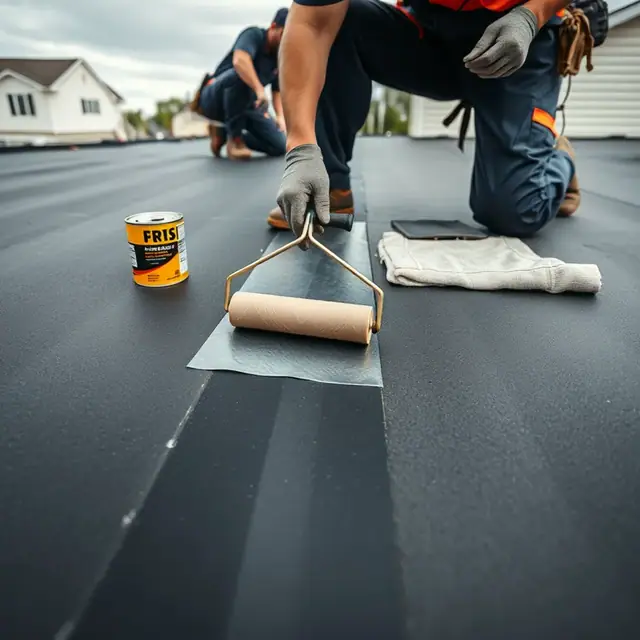
Insulation and cover board mechanically fastened or adhered, then the membrane installed with seams properly primed and rolled or heat-welded.
Walls, curbs, pipes, drains and parapets flashed and terminated. This is where flat roofs live or die and it gets the most crew time.
We flood-test or hose-test the drainage path, photograph every detail, and hand over the warranty paperwork.
Why us for this job
Roofing is a trade with a reputation problem and a good share of it is earned. Here is what is different about how this job runs with us.
Ask any contractor for these before you sign
Ten minutes with a knife tells us how many layers are up there, whether the insulation is saturated and what condition the deck is in. Quoting a low-slope roof without one is guessing, and the guess is either padded or it becomes a change order on day one.
If your roof ponds, a new membrane over the same low spot ponds too. We decide where the water is going before we price the membrane — tapered insulation, a relocated scupper, or framing correction where the joists have genuinely sagged.
On attached housing your membrane meets your neighbour's at a shared wall, and that detail protects both buildings. We fasten a term bar mechanically, seal the coping, and hand the photographs to both owners so there is a record.
Plenty of Harrisburg rowhome blocks have no alley wide enough for a dumpster. We load through the house with interior protection or over the roof from a neighbouring property with permission, and we price that honestly at the estimate rather than discovering it on tear-off morning.
Honest pricing
Low-slope pricing depends more on what is under the membrane than on the membrane itself. Two roofs of identical square footage can differ by half if one has saturated insulation and a sagging deck.
Be careful with quotes that recommend coating alone on a roof with ponding or wet insulation. A coating over a wet assembly seals the moisture in and shortens the deck's life.
Dry deck and sound insulation means a straightforward re-cover or tear-off. Wet insulation means removal and disposal by weight.
Tapered insulation packages, new scuppers or a relocated drain are meaningful line items — and the ones that stop the leak permanently.
Rowhome roofs reached through a third-floor window or over a neighbor's property take longer to load and strip than a commercial roof with crane access.
Flat roofs are priced heavily on linear feet of flashing. Lots of curbs, pipes and parapet corners means more skilled labor.
EPDM, TPO and modified bitumen sit at different price points, and warranty term length moves the number as well.
Where we do this work
Low-slope work is city work, and it is most of what we do inside the Harrisburg line. Rowhome rear sections in Allison Hill, Midtown, Camp Curtin and South Harrisburg make up the bulk of it, along with the mixed-use buildings through SoMa and the Cameron Street corridor in Uptown. Outside the city we cover the dense attached housing in Steelton and the river villages of Swatara Township, plus porch and addition roofs anywhere in the county.
FAQs
The questions Harrisburg homeowners actually ask us on this job.
A correctly installed EPDM or modified bitumen roof with real drainage should give you decades of service; the same membrane sitting under permanent ponding will fail far sooner. Drainage, not brand, is the variable that decides it.
Often yes. If the membrane is otherwise sound and the failure is a seam, a termination or a penetration, a targeted repair is the right call. If we core it and find wet insulation across the deck, patching is throwing money at it.
Regularly. We load through the house or over the roof from a neighboring property with permission, and we protect stairwells and interiors on the way through. It is normal work on blocks in Midtown and Camp Curtin.
On a small residential rear section, the cooling benefit is minor and the dirt-streaking is visible from upstairs windows. We usually specify TPO on commercial decks and EPDM or modified bitumen on homes.
Carefully, in cool weather, and not habitually. Membrane softens in summer heat and a boot heel can damage it, which is why we install walkway pads on any roof where somebody services rooftop equipment. If you are going up to clear a scupper — which is genuinely worth doing twice a year — go early in the morning, step flat rather than on your heels, and stay off any area where the surface feels spongy underfoot. Spongy means wet insulation beneath, and that is a phone call rather than a repair you make yourself.
Keep reading
Low-slope commercial systems, roof asset management and emergency response for Harrisburg businesses and property managers.
Learn moreSame-day leak detection and repair for active leaks anywhere in Harrisburg and Dauphin County.
Learn moreFast, correctly detailed repairs for leaks, blown-off shingles, failed flashing and storm damage across Harrisburg.
Learn moreCost & Insurance
Two identical rowhome roofs can differ in price by half, and the reason is almost never the membrane. It is what is underneath it.
February 11, 2026 · 8 min read
Roof Problems Explained
The 48-hour rule: water still standing two days after rain is not weather, it is a defect. Here are the three fixes that actually work.
June 3, 2026 · 7 min read
Free inspection, written report and a line-item estimate. Call (855) 705-1940 or send us the details and we will come look.
Free inspection Licensed & insured Written warranty