Harrisburg & Central PA
24–30 Inches of Snow a Year: Is Your Harrisburg Roof Ready?
The annual average is not the number that matters. What matters is the single heaviest event and what state your roof is in when it arrives.
The short answer
Harrisburg averages roughly 24 to 30 inches of snow a year, but the annual figure is not the risk — the single heaviest event is. What matters is water content rather than depth, and the dangerous pattern here is a substantial snowfall followed by rain and then a hard freeze.
Harrisburg averages somewhere in the range of 24 to 30 inches of snow across a typical winter. That figure reassures people, and it should not.
Averages are made of very different winters. Some seasons deliver it in a dozen manageable events. Others deliver most of it in one storm, and it is that single event — landing on whatever condition your roof happens to be in — that causes problems.
Here is how snow load actually works and which Harrisburg roofs genuinely need attention.
Snow weight is about water content, not depth
A foot of dry powder and a foot of wet snow are not remotely the same load. Fresh light snow may run around three pounds per square foot per foot of depth. Wet, dense snow can be several times that. Snow that has partially melted and refrozen, or that has absorbed subsequent rain, is heavier again.
The dangerous Central PA pattern is the one we get regularly: a substantial snowfall, followed by a warm-up with rain, followed by a hard freeze. The snowpack absorbs the rain, gains enormous weight, and then locks solid on the roof.
For reference, standing water weighs roughly 5.2 pounds per square foot per inch. Saturated snow behaves much the same way.
Which roofs actually need attention
- Low-slope and flat roofs — rowhome rear sections, porch roofs and additions hold everything that falls on them; a pitched roof sheds a good deal
- Roofs with existing structural issues — visible sagging or deflection means reduced capacity before winter starts
- Roofs carrying multiple layers — every layer is permanent dead load competing with the snow for the same capacity
- Large unsupported spans — carports, porch roofs, sunrooms and additions frequently have lighter framing than the main house
- Drift areas — valleys, spaces behind dormers, and lower roofs below a taller wall collect far more than the flat average
- Older agricultural buildings — barns and outbuildings with aged framing in West Hanover Township and out toward Dillsburg
Warning signs worth acting on
Doors and windows sticking
Interior doors that suddenly bind, particularly on an upper floor, can indicate frame deflection under load.
New cracks in drywall or plaster
Especially above door frames or where a ceiling meets a wall.
Sagging visible in a ceiling
A ceiling line that is no longer straight is a serious sign.
Creaking or popping noises
Framing under unusual load makes sounds. A house that suddenly becomes noisy under snow deserves attention.
Visible roof deflection from outside
Look along the ridge line and along the roof plane from ground level.
Safe snow removal — what to do and what not to
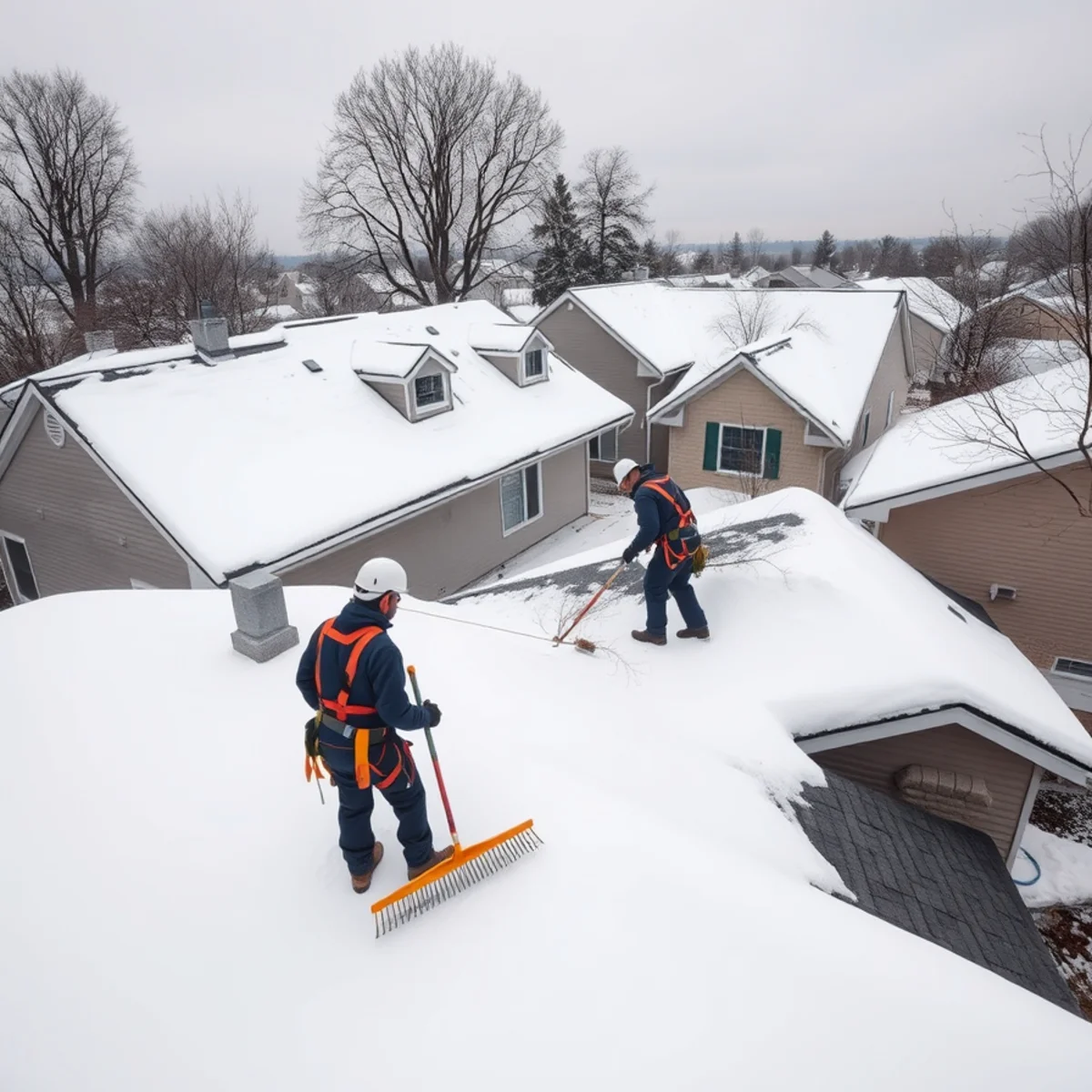
The right tool is a roof rake used from the ground. Clearing the lower three or four feet of a pitched roof reduces load at the eave and, more importantly, removes the fuel supply for ice dams.
What not to do: get on the roof. A snow-covered pitched roof is one of the most dangerous surfaces a homeowner can encounter, and people are killed doing this every winter in this state. Do not use metal shovels, which gouge shingles. Do not chip at ice. Do not throw salt on the roof — it corrodes flashing and gutters.
For a genuinely overloaded flat or low-slope roof, professional removal is the answer, and it is done carefully to avoid damaging the membrane underneath.
The bigger winter risk is ice, not weight
Structural collapse from snow is rare on a sound residential roof. Ice dams are not rare at all — they are an annual event across large parts of this county.
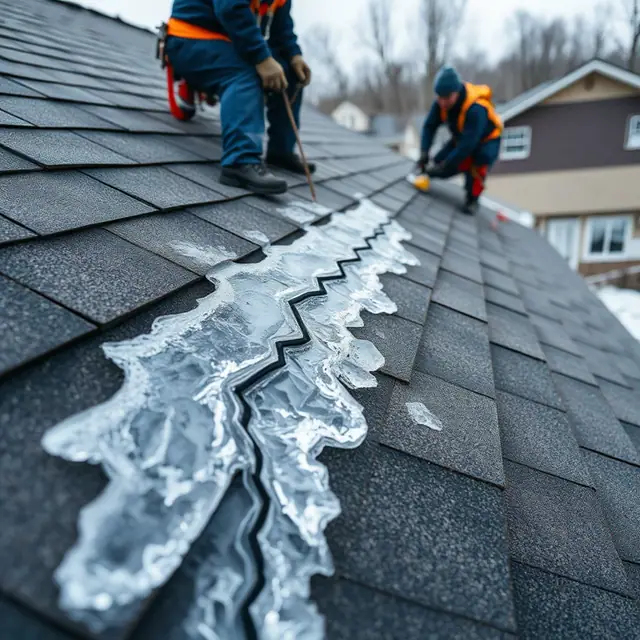
The mechanism is the same warm-attic problem we write about constantly: heat escaping into the attic melts snow on the deck, meltwater runs to the cold eave and refreezes, and the resulting dam backs water up under the shingles.
So the most useful pre-winter roof work is almost never structural. It is air sealing, insulation and ventilation — see how to prevent ice dams before winter hits Harrisburg and our ice dam removal service.
Getting ready before the first storm
- Clean gutters and downspouts completely in late autumn — a frozen gutter is where a dam starts
- Have any known roof defects repaired before winter; a small leak in October is a large one in January
- Check attic insulation depth and whether baffles are keeping the eave intake open
- Seal attic bypasses — recessed lights, the attic hatch, plumbing penetrations, bath fan ducts
- Trim limbs back from the roof plane before they are carrying an ice load
- Buy a roof rake before you need one; they sell out during a storm
What this means for your roof
Structural collapse on a sound residential roof is rare. Ice dams are not rare at all, and they are the realistic annual winter problem across most of this county — which means the most useful pre-winter work is almost never structural.
Clear the gutters after leaf drop, seal the attic bypasses, check that baffles are keeping the eave intake open, and buy a roof rake before you need one. See ice dam removal and repair.
Questions we get about this
How much weight can a residential roof hold?
More than most people fear, and less than some assume — it depends on the framing, the span and how much permanent dead load is already up there in accumulated roofing layers. Flat roofs, lightly framed additions and multi-layer roofs carry the real risk rather than a sound pitched roof.
Should I rake snow off my roof?
The lower three or four feet, from the ground, yes — it removes the fuel supply for ice dams and reduces eave load. Never get on the roof to do it. A snow-covered pitch is one of the most dangerous surfaces a homeowner can encounter.
Where does snow build up worst on a roof?
In the drifts rather than the open field: valleys, the areas behind dormers and chimneys, and any lower roof sitting beneath a taller wall. Those spots can carry several times the flat-ground depth, and framing is rarely sized for a drift nobody predicted.
Need help with this in Harrisburg?
We are a licensed and insured roofing contractor based at 1000 N Cameron St in Harrisburg. Free inspections, written reports and honest recommendations.
Related services
Areas mentioned