Emergency Guides
Nor'easter Shingle Blow-Off: What to Do in the First Hour
Missing shingles are the obvious damage. The expensive damage is the shingles still sitting where they belong with their seals broken — and almost nobody checks for it.
The short answer
Photograph every elevation from the ground before you pick up a single shingle from the yard, check the attic for daylight or damp sheathing, and get any exposed underlayment covered the same day. Then insist any inspection includes lifting tabs by hand — broken seals are the damage nobody looks for.
Nor'easters and summer line storms do the same thing to Harrisburg roofs by different routes. The Susquehanna valley channels systems moving through and intensifies the gusts, which is why wind damage here is a recurring seasonal condition rather than an unusual event.
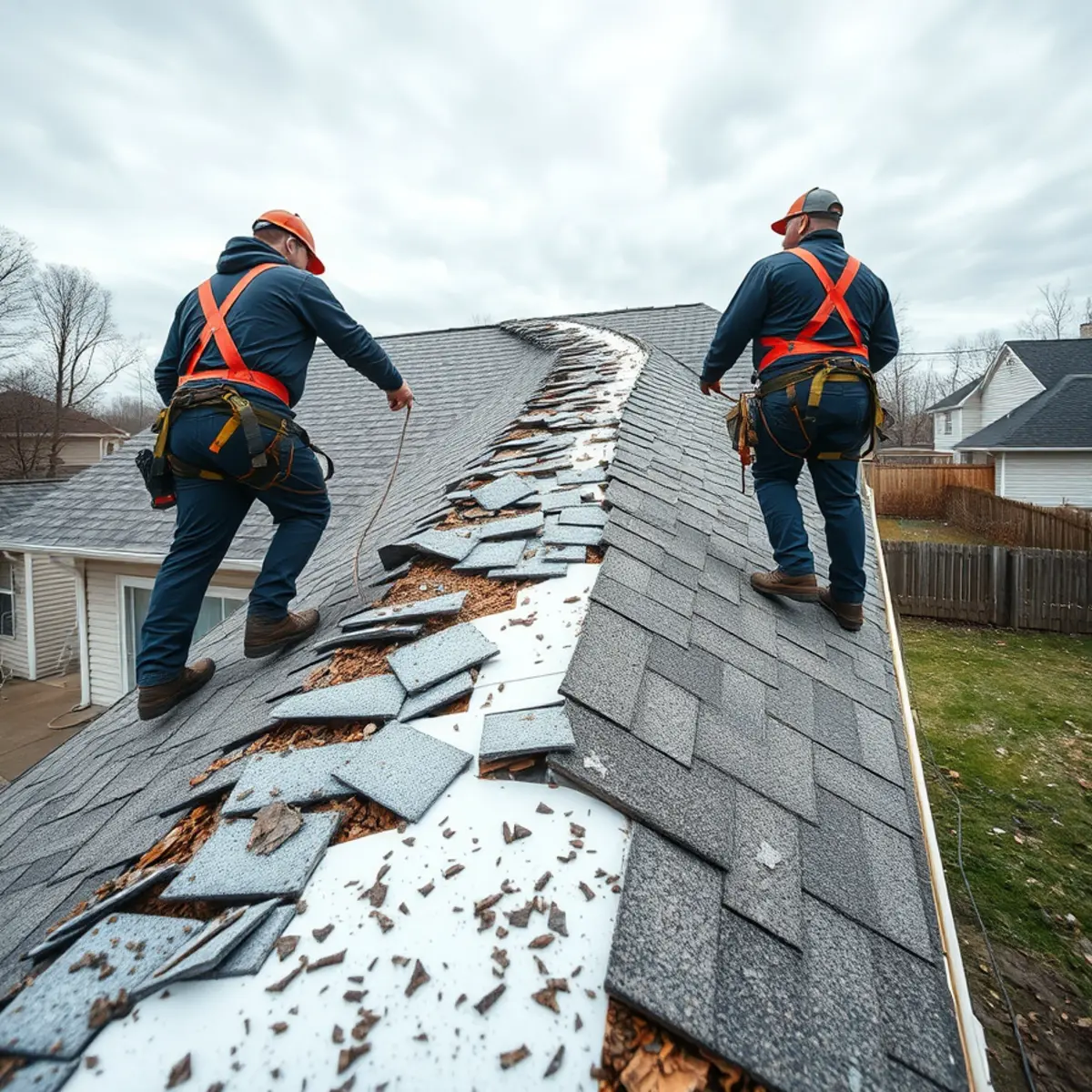
The visible result is shingles in the yard. The expensive result is the ones still on the roof with their seal strips broken — invisible from the ground, still perfectly in place, and no longer bonded to anything.
Here is what to do in the first hour, and what to insist on during the inspection.
The first hour
Look, do not climb
Walk the perimeter from the ground with binoculars or a phone camera zoomed in. Wet or wind-damaged roofs are genuinely dangerous and you gain nothing by being up there.
Photograph from every side
Wide shots of each elevation showing the whole roof plane, then zoomed shots of the damage. Photograph the shingles that landed in your yard where they landed, before you pick them up.
Check the interior and attic
Look for fresh stains and, in the attic, for daylight or damp sheathing. Underlayment is water-resistant, not waterproof — if the shingles are gone, water is getting in somewhere.
Get exposed areas covered
Bare deck or exposed underlayment will not survive the next rain. That needs a proper tarp the same day.
Note the date and the storm
Write down the date and roughly when it happened. Claims tied to a specific documented weather event are dramatically easier to get approved than vague reports.
The damage nobody looks for: broken seal strips
Every asphalt shingle has an adhesive strip that bonds it to the course below. That bond is what makes a roof a continuous surface rather than a stack of loose tiles.
Wind does not usually rip shingles off. It gets under the leading edge, breaks the seal, folds the shingle back, and lays it down again when the gust passes. From the ground the roof looks completely untouched. In reality that shingle is unsealed and creased along the fold line, and the fiberglass mat inside is fractured.
The next storm will take it, along with the ones above it that it was helping hold down. And crucially: the damage was caused by the storm that unsealed it, not the one that finally removed it. That distinction is worth real money on a claim.
Finding it requires someone lifting tabs by hand across each slope. It is the most commonly skipped step in this market and it is on every inspection we do — see wind and hail damage repair.
Where wind damage concentrates
- Rake edges — the sloped edge at the gable end, where wind gets its first purchase. Missing starter strip here is the most common installation defect we find
- Ridge and hip caps — the most exposed shingles on the roof and usually the first to go
- The windward slope — damage follows the storm's direction, so one elevation is typically far worse than the others
- Around raised edges — anywhere a previous repair, a vent or a skylight creates a lip for wind to catch
- Valleys — where two slopes meet, wind accelerates and any loose material lifts
What your insurer will want
Wind claims are usually straightforward when documented properly and frustrating when they are not.
You want: dated photographs of each elevation, photographs of the shingles that came off, a professional inspection report identifying damage per slope, documentation of seal failure where it exists, and the date of the specific weather event.
You also want to check one line on your declarations page before filing: many Pennsylvania policies carry a separate wind and hail deductible, frequently calculated as a percentage of dwelling coverage rather than a flat amount. On a $350,000 home, a 1% wind deductible is $3,500, and that changes the arithmetic on a small claim considerably.
Repair or replace after a blow-off
It depends on how much of the roof is affected and whether your shingle can still be matched.
Isolated damage on one slope with a current-production shingle is a repair. Damage across multiple elevations, or a discontinued shingle where a repair would leave a visibly mismatched patch on a front elevation, is a legitimate argument for slope or full replacement in a claim.
What a repair must include: replacement rather than re-sealing of creased shingles, hand-sealing in cold weather so the new material bonds immediately, and the correct nailing pattern for the shingle's wind rating — which on most high-wind laminates is six nails, not four.
What to do next
Missing shingles are the easy part of a wind claim. The part that decides whether you get a fair settlement is the seal failure across the rest of the roof, and finding it takes somebody willing to lift tabs by hand on every slope rather than photographing the obvious gap from the driveway.
Get it documented while the storm is still a dated event you can point to. Our post-storm inspection is free and produces a written report either way — see wind and hail damage repair.
Questions we get about this
How many missing shingles justify an insurance claim?
There is no fixed number — what matters is the damage across the whole roof relative to your deductible, including the unsealed shingles that are still in place. Check your declarations page first: many Pennsylvania policies carry a separate, higher wind and hail deductible calculated as a percentage of dwelling coverage.
Can I just have the missing shingles replaced myself?
You can, and on a young roof with a current-production shingle it may be all that is needed. The risk is that replacing the visible gap leaves an unsealed roof around it, so the same wind takes more next time — and by then the storm that caused it is harder to point to.
Will new shingles match my existing roof?
Profile and colour are matched as closely as the current product line allows. On a roof older than about fifteen years an exact match usually no longer exists and there will be a visible difference in weathering — which is itself a legitimate argument for a slope or full replacement in a claim.
Need help with this in Harrisburg?
We are a licensed and insured roofing contractor based at 1000 N Cameron St in Harrisburg. Free inspections, written reports and honest recommendations.
Related services
Areas mentioned