Roof Problems Explained
Ponding Water on a Flat Rowhome Roof: Causes & Permanent Fixes
The 48-hour rule: water still standing two days after rain is not weather, it is a defect. Here are the three fixes that actually work.
The short answer
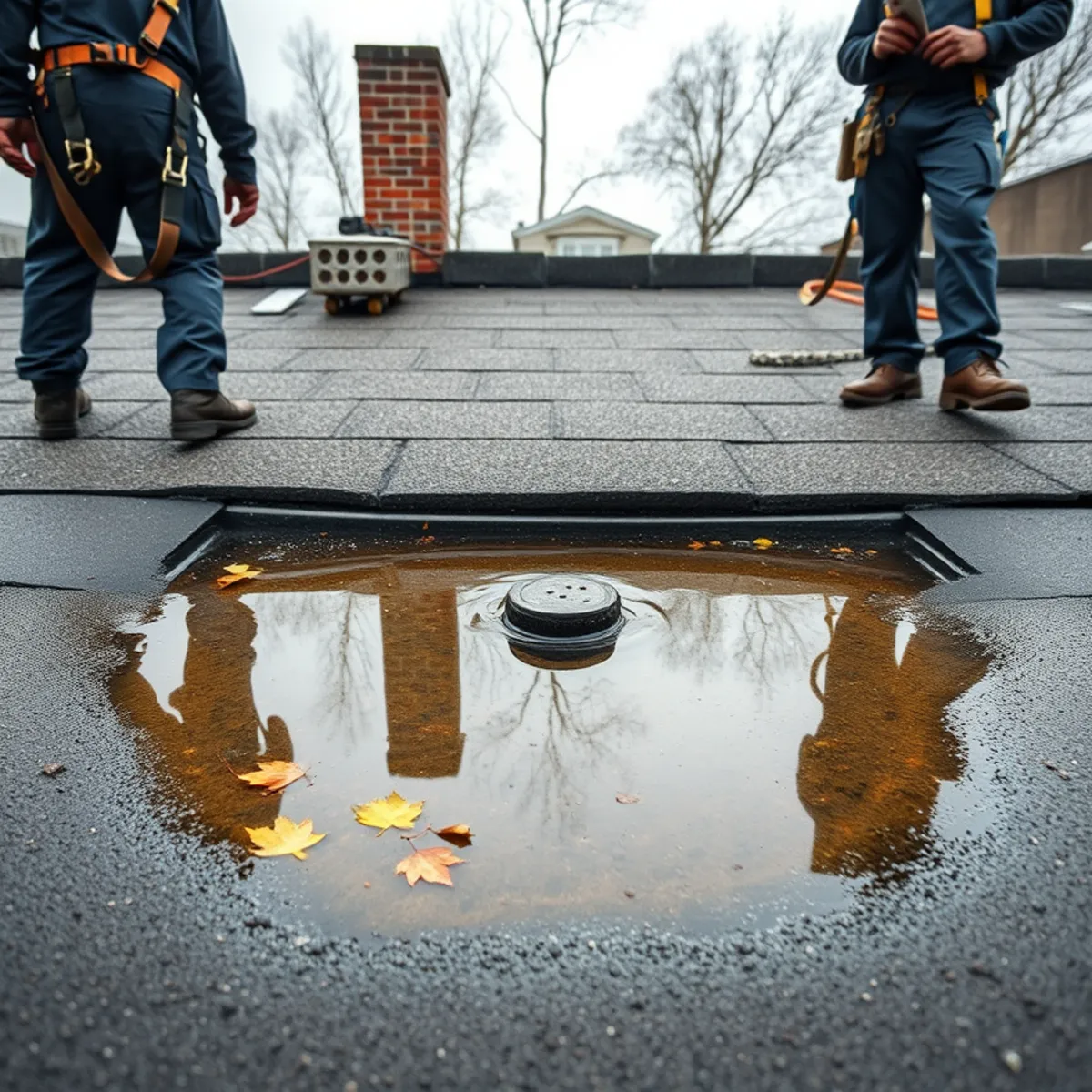
Water still standing 48 hours after rain is ponding, and it is a defect rather than weather. The causes are deck deflection, insufficient original slope, blocked or badly placed drainage, or added roofing layers damming the surface. The fixes are tapered insulation, framing correction, or moving the drainage.
Industry practice treats water that has not drained within 48 hours of rainfall as ponding — a defect rather than a normal condition. On Harrisburg's rowhome rear sections, porch roofs and additions, ponding is extremely common and almost always ignored until it leaks.
It should not be ignored, for three reasons: it accelerates membrane breakdown, it adds substantial dead load to framing that may already be a century old, and it finds every seam and termination the roof has.
Why ponding is worse than it looks
- Weight. Water is roughly 5.2 pounds per square foot per inch of depth. Two inches across a 20-by-30 rowhome roof is over six thousand pounds of load the joists were never asked to carry
- Accelerated aging. Continuous saturation breaks down membranes, adhesives and seam tapes far faster than wet-dry cycling
- Freeze-thaw amplification. In Central PA, ponded water freezes and expands directly on top of your seams all winter
- Debris and vegetation. Standing water collects silt and organic matter, and given a season, things grow in it
- Leak concentration. Any defect under a pond is under constant hydrostatic pressure rather than occasional runoff
The four causes
Deck deflection
Joists have sagged over decades — from age, from previous water loading, or because the roof was re-covered several times and the accumulated weight added up. The low spot is structural.
Insufficient original slope
Plenty of older Harrisburg rowhome roofs were built essentially dead flat, relying on a scupper at the rear and optimism.
Blocked or badly placed drainage
A clogged scupper or internal drain turns the roof into a basin. Worse, a scupper placed at the high corner — which we find constantly on roofs re-done cheaply decades ago — means water is being asked to run uphill.
Added roofing layers
Each re-cover raises the surface, and if a layer stops short of a drain or builds up unevenly, it creates dams within the roof itself.
Fix 1: tapered insulation
The cleanest solution when the deck is structurally sound. Rigid insulation is manufactured in tapered panels and laid out in a designed pattern that builds slope into the new assembly, directing water to the drain or scupper.
It adds R-value at the same time, which on a rowhome rear section over a kitchen is a genuine comfort benefit. It is a real line item on the estimate and it is the item most often cut from a cheap quote.
Fix 2: framing correction
When the deck itself has deflected, tapered insulation is putting a slope on top of a sag. Sometimes acceptable; sometimes not.
The structural answer is sleeper framing over the existing deck to establish a true plane, or sistering and re-decking where joists have genuinely failed. It is more expensive and it is the right call when the deflection is significant or still progressing.
Fix 3: fixing the drainage itself
Sometimes the roof has adequate slope and the water is simply going somewhere it cannot leave.
That means adding a scupper, relocating one to the actual low point, adding an overflow scupper as a safety measure, installing proper strainers, or clearing and repairing an internal drain that has been blocked for years. On rowhomes it also frequently means correcting a termination at the party wall that is acting as a dam.
What does not work: coating over a pond
Liquid-applied coatings have a legitimate use — extending the life of a sound, dry roof. Applied over a ponding roof they solve nothing.
The coating still sits in the low spot. It is still under standing water. And if the insulation underneath is already saturated, the coating seals that moisture in, where it continues to degrade the assembly and the deck out of sight.
This is the most commonly sold non-solution on Harrisburg rowhome roofs. If a contractor proposes coating a roof that ponds without addressing the drainage, get another opinion.
What we do first: the test core
Before recommending anything, we cut a small core through the assembly to the deck. That tells us how many layers there are, whether the insulation is wet, and what condition the deck is in.
Wet insulation has to come out — no exceptions. A sound dry assembly with a slope problem is a very different and much cheaper project than a saturated one. See flat and low-slope roofing for how the work runs.
What to do next
The one thing that never works is a coating over a ponding roof. The coating still sits in the low spot, still sits under standing water, and if the insulation beneath is already wet it seals the moisture in where it keeps working on the deck out of sight.
Start with a test core. It tells you whether you are solving a slope problem on a sound assembly or a saturation problem on a failing one, and those are completely different invoices. See flat and low-slope roofing.
Questions we get about this
How much does ponding water actually weigh?
Roughly 5.2 pounds per square foot per inch of depth. Two inches across a 20-by-30 rowhome roof is over six thousand pounds sitting on framing that may be a century old — which is why ponding tends to get worse rather than stay stable.
Is some standing water on a flat roof normal?
Immediately after rain, yes. Forty-eight hours later, no. That is the industry threshold and it is a reasonable one: past that point the membrane, the seams and the adhesives are all being worked on continuously rather than cycling wet and dry.
Will adding drains fix ponding?
Sometimes, if the roof has adequate slope and the water simply has nowhere to leave. Where the deck itself has deflected, a new drain in the wrong place changes nothing — you need tapered insulation or framing correction to move the water to the outlet.
Need help with this in Harrisburg?
We are a licensed and insured roofing contractor based at 1000 N Cameron St in Harrisburg. Free inspections, written reports and honest recommendations.
Related services
Areas mentioned