Roof Problems Explained
Missing or Slipped Slate Tiles? How Slate Roof Repair Actually Works
There is one correct way to replace a slate, and it has not changed in a century. Here is what it looks like — and the three shortcuts that destroy roofs.
The short answer
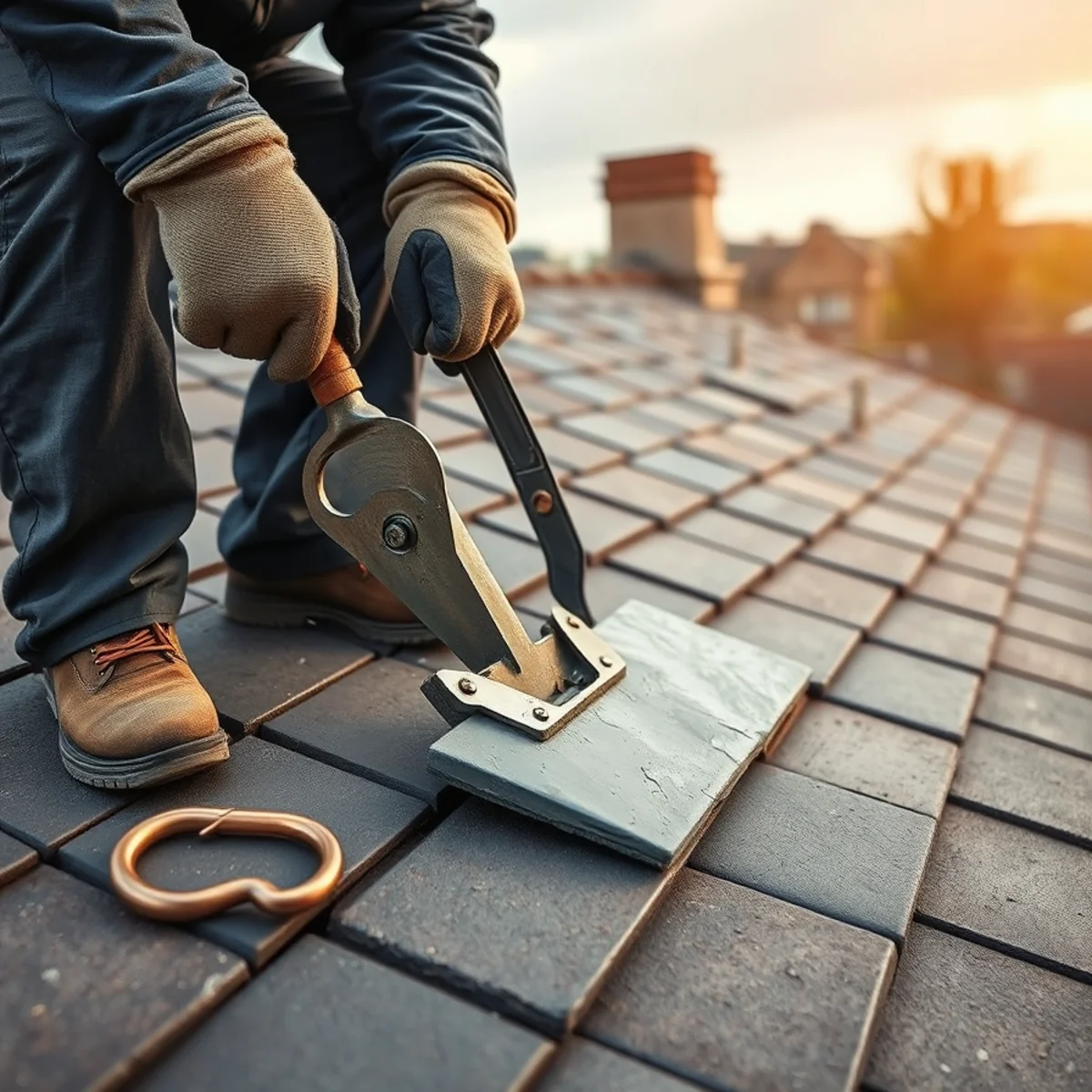
A broken slate is removed with a ripper that shears the old nails, a matched slate is slid into place, and it is secured with a copper hook or a nail set in the joint above and covered by a copper bib. Nothing penetrates the exposed face. Done that way it lasts as long as its neighbours.
You found a slate in the yard after a windstorm. It is intact — not cracked, not crumbled, just lying there.
That is good news, and most homeowners do not know it. An intact slate on the ground means the nail failed, not the slate. Your roof lost a fastener, not a material. And fixing it correctly is a well-established century-old procedure that any competent slater can perform.
The problem is finding someone who will do it correctly instead of quickly.
How a slate roof is actually held together
Each slate is nailed near its top edge, and the two courses above it overlap and cover those nails. Nothing penetrates the exposed portion of any slate. That is the whole system: gravity, overlap and a fastener that is always protected.
Which creates the repair problem. To replace one slate you have to reach fasteners that are covered by two courses of slate above, without removing and re-hanging half the roof.
The correct repair, step by step
Shear the old nails with a ripper
A slate ripper is a long flat steel bar with a hooked end. It slides up under the broken slate, hooks the nail shank, and shears or pulls it with a sharp downward blow. The broken pieces then come out.
Select and dress a matching slate
Matched for size, thickness and color. If it needs trimming, a slate cutter gives the correct beveled edge — the underside is bevelled so the slate sits flat and sheds properly.
Slide the replacement into position
The new slate goes up into the gap until it aligns with its course.
Secure it — hook or bib
Either a copper slate hook, which engages the bottom edge of the slate and is fastened into the joint of the course below; or a nail driven through the joint between the slates above, covered by a copper bib slid up under the course above so the nail head is protected. Both methods leave the exposed face of the slate untouched.
Verify the courses around it
The slates adjacent to a failure are frequently loose too. A good repair checks and re-secures them rather than leaving the next call to happen next month.
The three shortcuts that destroy slate roofs
- Roofing cement (tar). It traps moisture against the slate, accelerating decay, and it becomes rock-hard so removing it later breaks the surrounding slates. It is the single most damaging thing done to Harrisburg slate roofs
- Face nailing. Driving a nail through the exposed part of the slate. It cracks within a couple of freeze-thaw seasons and creates a direct water path in the meantime
- Asphalt patches. A shingle cut to fit over a hole. It is visible from the street, it does not seal, and it tells every future roofer that this roof has been treated as disposable
Why the material match matters
Pennsylvania grey-black slate — the material on most of Harrisburg's roofs — weathers differently from Vermont green, purple or red. Thickness varies too, and a slate that is noticeably thicker or thinner than its neighbors sits proud or recessed and looks wrong even at a distance.
We keep salvaged Pennsylvania slate in stock in common sizes for exactly this reason. On a front elevation where the match has to be right, the standard preservation practice is to harvest matching slates from a hidden rear slope and install the new material where nobody sees it.
When it is not just the slates
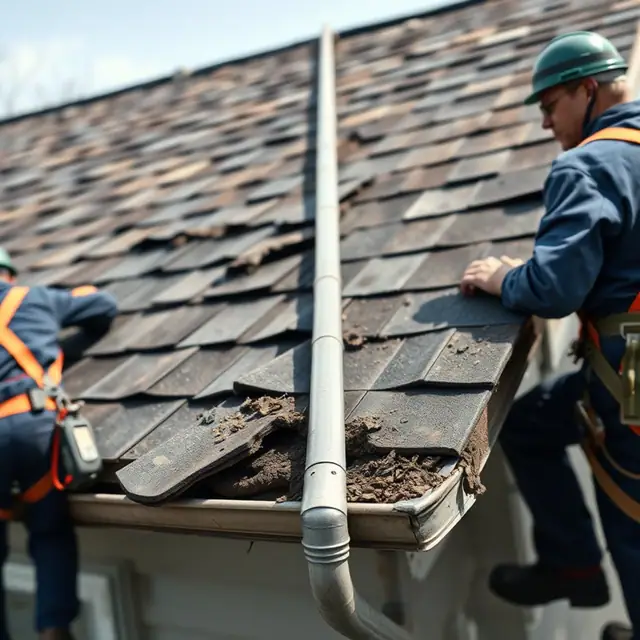
Frequently the actual failure is the metal, not the stone. Valleys, chimney flashing and sidewall flashing on a century-old roof reach the end of their service life long before the slate does.
Rebuilding a copper valley means carefully removing and re-hanging the slates on both sides of it — slow, skilled work, and permanent when done right. If your leak is at a valley or a chimney, expect the scope to be about the metal rather than the slate.
Is your roof nail-sick?
If you are finding intact slates on the ground after most windstorms, the fasteners across that slope are probably failing generally. That is nail sickness, and the answer is a systematic re-hang of the affected slope rather than chasing individual slates every spring.
It is a significant project and it is still dramatically cheaper than replacement — and it leaves you with a roof that has decades left. More on the economics in slate roof repair vs. replacement: a cost breakdown.
The bottom line
An intact slate on the ground after a windstorm is good news that most homeowners misread. The stone is fine; a hundred-year-old iron nail failed. That is a repair, and if it is happening across a whole slope it is a systematic re-hang rather than a dead roof.
What makes the next repair harder is the last one. Roofing cement, face nails and asphalt patches all have to be undone before proper work can start, and undoing hardened tar without breaking the surrounding slates is slow. See slate roof repair.
Questions we get about this
How much does it cost to replace a few slates?
It is priced by skilled labour hours and access rather than by the slate. A handful in one area on a reachable slope is a modest invoice; the same number scattered across four elevations means four separate staging setups and costs accordingly.
Can I walk on a slate roof?
Not without knowing what you are doing. Slate breaks under concentrated weight in the wrong place, and a cracked slate you created is now a leak. Slaters work off roof jacks, ladders staged on flat sections and hook ladders for exactly this reason.
What is a slate hook?
A small copper hook fastened into the joint below a slate, which catches its bottom edge and holds it in place. It lets a replacement slate be secured without driving a fastener through the exposed face, which is what makes the repair permanent and invisible from the street.
Need help with this in Harrisburg?
We are a licensed and insured roofing contractor based at 1000 N Cameron St in Harrisburg. Free inspections, written reports and honest recommendations.
Related services
Areas mentioned