Commercial & Property Managers
Multi-Family & Rental Roofing: What Harrisburg Landlords Need to Know
A roof leak in a rental is not just a repair — it is a habitability issue with a clock on it. How to manage roofs across a Harrisburg portfolio.
The short answer
A roof leak in a rental is not just a maintenance ticket — it raises habitability questions with a clock attached. Respond quickly, document that you did, and communicate in writing. Then get ahead of it: knowing every roof's condition beats reacting to whichever one fails first.
Roofing a rental property is a different problem from roofing your own house, and the difference is not technical. It is that a leak in a rental has a tenant, a lease, a habitability standard and a timeline attached to it.
Harrisburg has a large rental stock — rowhomes across Allison Hill and South Harrisburg, converted singles in Midtown and Uptown, purpose-built multi-family throughout the city, and student rentals around the colleges. Much of it is older, much of it has low-slope roofing, and much of it has been maintained reactively.
Here is how to manage it deliberately instead.
Why reactive roofing costs landlords more
The reactive cycle is familiar: tenant reports a leak, you send someone to patch it, it holds for a while, it comes back. Each visit is a call-out charge, each one is a tenant relationship cost, and none of them address the underlying condition.
Meanwhile the water is doing damage between visits — wet insulation, stained ceilings that need repainting at turnover, and eventually framing.
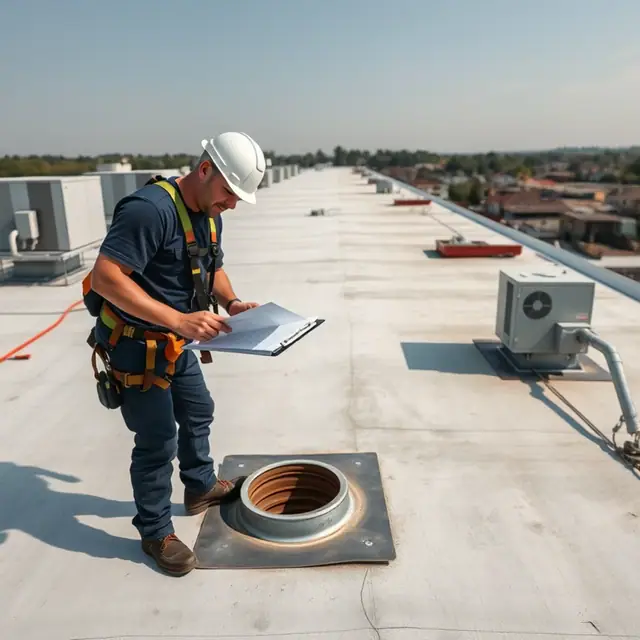
The alternative is knowing the condition of every roof you own and replacing on your schedule. That means an assessment of each property with a projected remaining life, then sequencing replacements across years rather than reacting to whichever one fails first.
The habitability clock
A roof leak in an occupied unit is not simply a maintenance ticket. Water intrusion into living space raises habitability questions, and delay converts a repair cost into a dispute.
Practically: respond quickly and document that you did. Photograph the reported condition, log the date and time of the report and of your response, keep the contractor's report and invoice, and communicate with the tenant in writing about what is happening and when.
That documentation trail is protective. It also happens to be exactly what you would want if the damage turns out to be an insurable event.
Scheduling around tenants
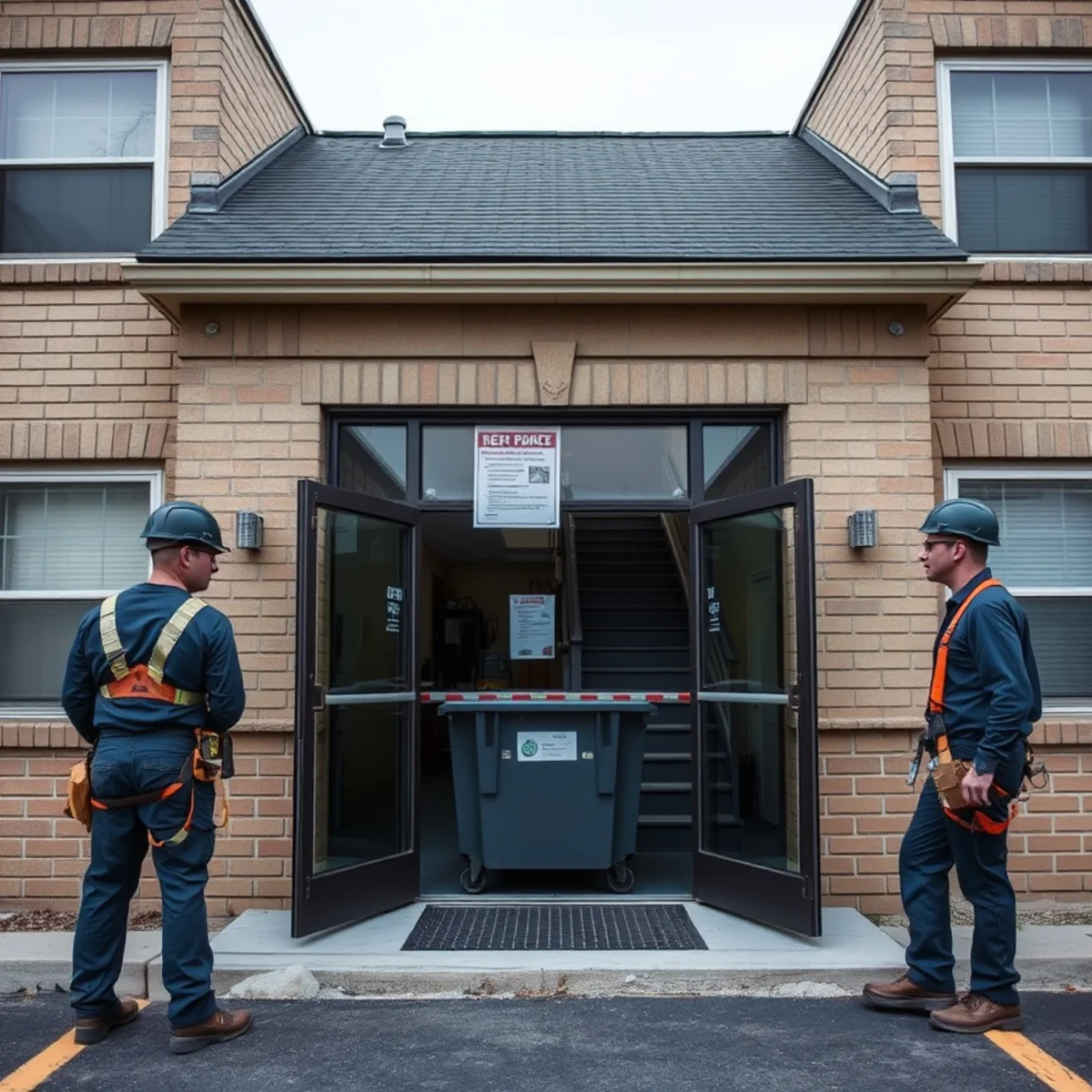
- Written notice with dates — not 'sometime next week'. Tenants tolerate disruption far better when it is predictable
- Working hours agreed in advance — tear-off is loud, and a building with shift workers or small children needs the conversation
- Parking and access plan — dumpster placement, material staging and how tenants get in and out
- Nothing left open over an occupied unit — ever, at any point, for any reason
- Interior protection where access is through the building — stairs, hallways and finishes
- A named point of contact — one person tenants can raise issues with, so they do not raise them with you
Turnover is your best scheduling window
If a unit is vacant, that is the moment to do disruptive work — particularly on a small multi-family building where the roof sits directly over one or two units.
The same applies to student rentals around Middletown and Elizabethtown, where the academic calendar produces a predictable summer window that is worth planning a year ahead for.
Building your replacement sequence around known vacancies is free scheduling efficiency, and it eliminates most of the tenant friction from the job.
The rowhome party-wall problem, for landlords
If you own attached property in Allison Hill, South Harrisburg or Camp Curtin, your roof plane is continuous with your neighbors'.
Two consequences. Water entering your building may be originating at a neighbor's failed termination — which is worth establishing with documentation before you spend money on your own roof. And when you re-roof, the termination at the party wall protects both properties, so it needs to be mechanically fastened and photographed on completion.
Where you own adjacent properties, do them together. It is cheaper per building and the tie-in is detailed once.
What to ask a contractor working on rental property
- Certificates of insurance naming you as additional insured, provided before mobilization
- A written tenant communication plan and notice period
- A condition report per property with an estimated remaining life, not just a quote
- Photographic documentation of the work, useful for your records and for any future claim
- Willingness to phase work across a portfolio and across budget years
- A named site contact who is actually on the job, not a salesperson
Budgeting a portfolio
The exercise worth doing once: walk every roof you own, record system type, approximate age, condition and a projected replacement year, and put it in a spreadsheet.
It takes an afternoon per handful of properties and it changes how you budget permanently. Instead of an unplanned five-figure expense in whatever year a roof fails, you have a sequence — this one in 2027, that one in 2029 — and you can negotiate better pricing by scheduling work rather than emergency-ordering it.
We provide exactly that assessment as part of our commercial roofing work, and it applies just as well to a portfolio of six rowhomes as to an office park.
What to do next
Walk every roof you own once, record system type, approximate age, condition and a projected replacement year, and put it in a spreadsheet. It takes an afternoon per handful of properties and it changes how you budget permanently.
Then use your vacancies. Turnover is the cheapest and least disruptive window you will get for disruptive work, and around the colleges it is predictable a year ahead. See commercial roofing for how we phase portfolio work.
Questions we get about this
How quickly must a landlord fix a roof leak in Pennsylvania?
Promptly is the practical standard, and what protects you is the documented timeline rather than a specific number of days. Log the date and time of the report and of your response, photograph the condition, and keep the contractor's report and invoice.
Should landlords repair or replace rental roofs?
It depends on the roof rather than the tenancy, but reactive patching across a portfolio reliably costs more than planned replacement. Each call-out carries a charge, each visit is a tenant relationship cost, and the water keeps working between visits.
Can roof work be done with tenants in place?
Yes, and most of it is. What makes it go well is written notice with actual dates, agreed working hours, a parking and access plan, interior protection where the route runs through the building, and one named contact tenants can raise issues with.
Need help with this in Harrisburg?
We are a licensed and insured roofing contractor based at 1000 N Cameron St in Harrisburg. Free inspections, written reports and honest recommendations.
Related services
Areas mentioned