Commercial & Property Managers
Commercial Flat Roof Maintenance Plans: A Guide for Harrisburg Property Managers
Most commercial roofs in this region fail years early for the same reason: nobody cleared the drains. Here is what a real maintenance plan covers.
The short answer
A commercial maintenance plan is two inspections a year plus after any significant storm, with drains and scuppers cleared every visit, seams and terminations checked, minor repairs made on the spot — and a dated photographic condition report that builds into a record you can budget from.
Commercial roofing is an asset management problem wearing a construction hat. The membrane is rarely the expensive part of a failure. The tenant claim, the ruined inventory, the interrupted operation and the capital replacement arriving five years early — those are the expensive parts.
And the majority of commercial roof failures we are called to in the Harrisburg area were preventable with two visits a year.
Here is what a maintenance plan should actually include, and what it should produce for you.
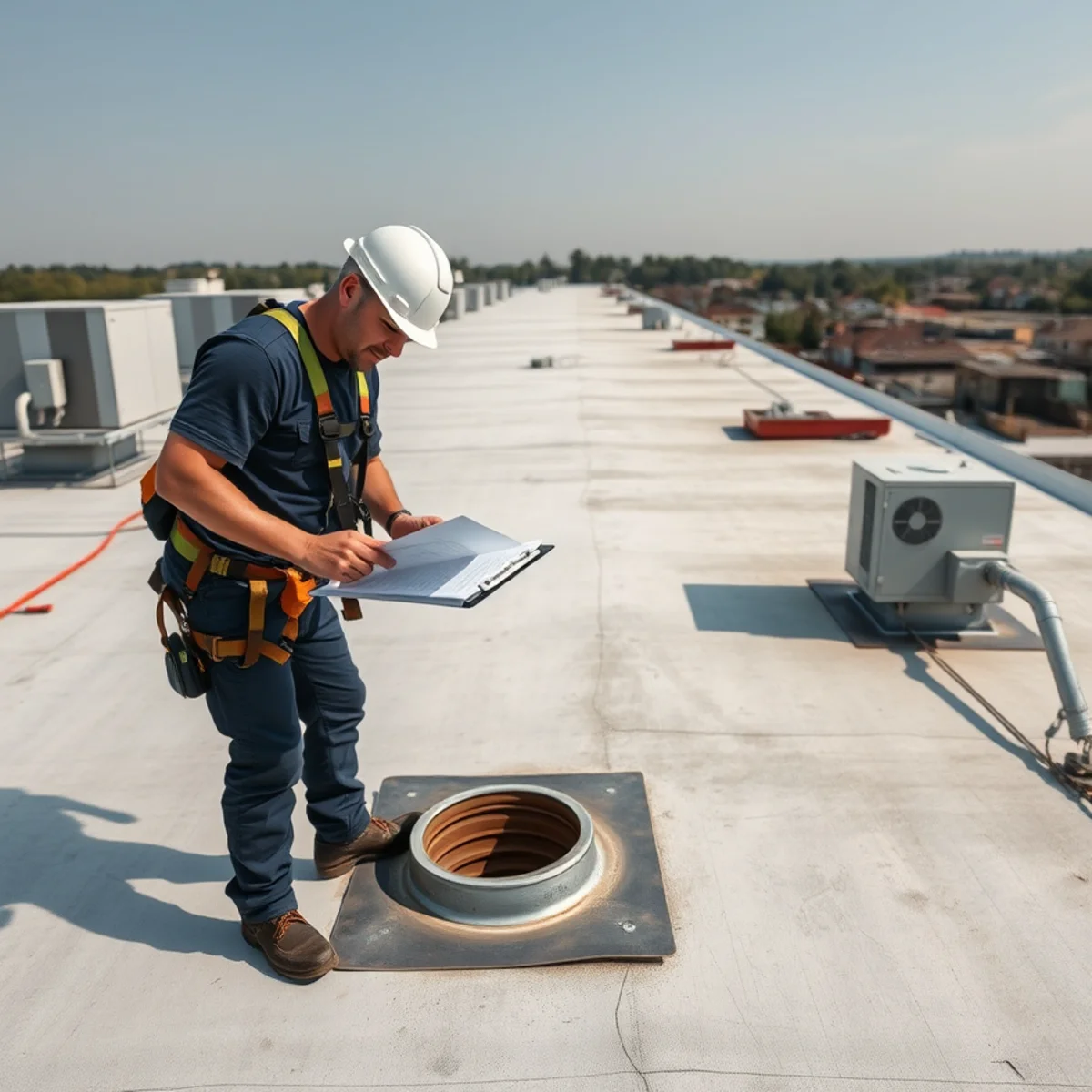
The twice-yearly inspection scope
- Drains, scuppers and overflows cleared — the single highest-value item. One blocked internal drain can put tons of water on a deck
- Seams inspected end to end — fishmouthing, lifting, splits and any evidence of shrinkage
- Perimeter and terminations — edge metal, coping, term bars and counterflashing at every wall
- Curb and penetration flashing — HVAC curbs, exhaust fans, conduit, gas lines, satellite and antenna mounts
- Ponding assessment — mapped and photographed, with depth noted, tracked visit to visit
- Membrane condition — punctures, abrasion, weathering, and traffic wear along service routes
- Debris removal — anything holding moisture or capable of blocking a drain
- Minor repairs on the spot — small punctures, loose terminations and open laps handled during the visit
The part that matters most: what you get afterward
An inspection that produces no document is worth very little. What a plan should give you is a written condition report with photographs, dated, per roof.
That report should note what was found, what was repaired during the visit, what needs scheduling, and what to watch. Over several years it becomes a record — and a record is what turns a capital conversation from an opinion into a projection.
When you are sitting in a budget meeting explaining why building three needs a roof in 2029, a three-year photographic record of progressive seam deterioration is a different kind of argument than 'the roofer says it is getting old'.
Your manufacturer warranty probably requires this
Most manufacturer system warranties on commercial roofs contain a maintenance requirement — typically periodic inspection, documented, with repairs performed by an approved contractor.
A surprising number of building owners void their warranty simply by never inspecting and never keeping records. Then a seam fails in year twelve of a twenty-year warranty and the claim is declined, correctly, for lack of maintenance documentation.
If you hold system warranties on any of your roofs, read the maintenance clause. Then make sure someone is meeting it and keeping the paperwork.
Building a roof asset file
For portfolios, the plan should produce a file per building containing: system type and membrane thickness, installation date, warranty holder and expiry, area in square feet, drainage configuration, repair history with dates and costs, current condition rating, and a projected replacement year.
That is the document that lets you sequence capital work across a portfolio rather than replacing whichever roof leaks first. It also makes buildings easier to underwrite, refinance and sell.
More on this in roof asset management for Cameron Street corridor commercial buildings.
The specific failure points in this region
- Freeze-thaw on seams — Central PA cycles through freezing dozens of times per winter, working directly on every lap and termination
- Ponding plus freezing — standing water that freezes on a seam is the worst combination there is
- HVAC service traffic — technicians walking the same route to the same unit for a decade wear a track through the membrane. Walkway pads solve this permanently
- Grease on restaurant roofs — degrades most single-ply membranes; needs containment and compatible material around exhaust
- Wind uplift at the perimeter — edge metal and the first few feet of membrane take the highest uplift loads
- Snow drift at parapets and taller walls — loads well above the flat-ground average
What a plan costs versus what it saves
A twice-yearly maintenance visit on a typical commercial roof is a modest annual line item. Compare it against the alternatives.
A leak over occupied tenant space costs the repair plus the interior damage plus, potentially, a tenant claim and abatement. Wet insulation discovered late converts a re-cover into a full tear-off with disposal by weight. A voided warranty converts a covered defect into a capital expense. And a replacement forced by failure happens on the weather's schedule, at whatever price the emergency market offers.
Our commercial program and how it runs is on the commercial roofing page.
What to do next
Read the maintenance clause in your manufacturer system warranty. Most contain one, and a surprising number of building owners void their warranty simply by never inspecting and never keeping records — then find out in year twelve when a seam fails.
Then start a file per roof: system, thickness, install date, warranty status, area, drainage configuration, repair history and a projected replacement year. That is what turns a surprise capital expense into a planned one. See commercial roofing.
Questions we get about this
How often should a commercial roof be inspected?
Twice a year plus after any significant storm. Spring and autumn works well in Central PA: autumn clears the drains before winter, spring assesses what freeze-thaw did to the seams.
What is the most valuable thing on a maintenance visit?
Clearing the drains and overflow scuppers. On a large deck, blocked drainage is a structural problem rather than a housekeeping one — standing water is roughly 5.2 pounds per square foot per inch, and across an acre that adds up quickly.
Does maintenance actually extend a commercial roof's life?
Yes, and measurably. A roof inspected twice a year with drains cleared and small defects repaired promptly reaches or exceeds its design life; the same roof unmaintained frequently does not. The failure that costs most is wet insulation discovered late, and inspection is what catches it early.
Need help with this in Harrisburg?
We are a licensed and insured roofing contractor based at 1000 N Cameron St in Harrisburg. Free inspections, written reports and honest recommendations.
Related services
Areas mentioned