Commercial & Property Managers
Roof Asset Management for Cameron Street Corridor Commercial Buildings
Most commercial roofs get replaced when they fail. The buildings that do better treat the roof like any other depreciating asset — with data.
The short answer
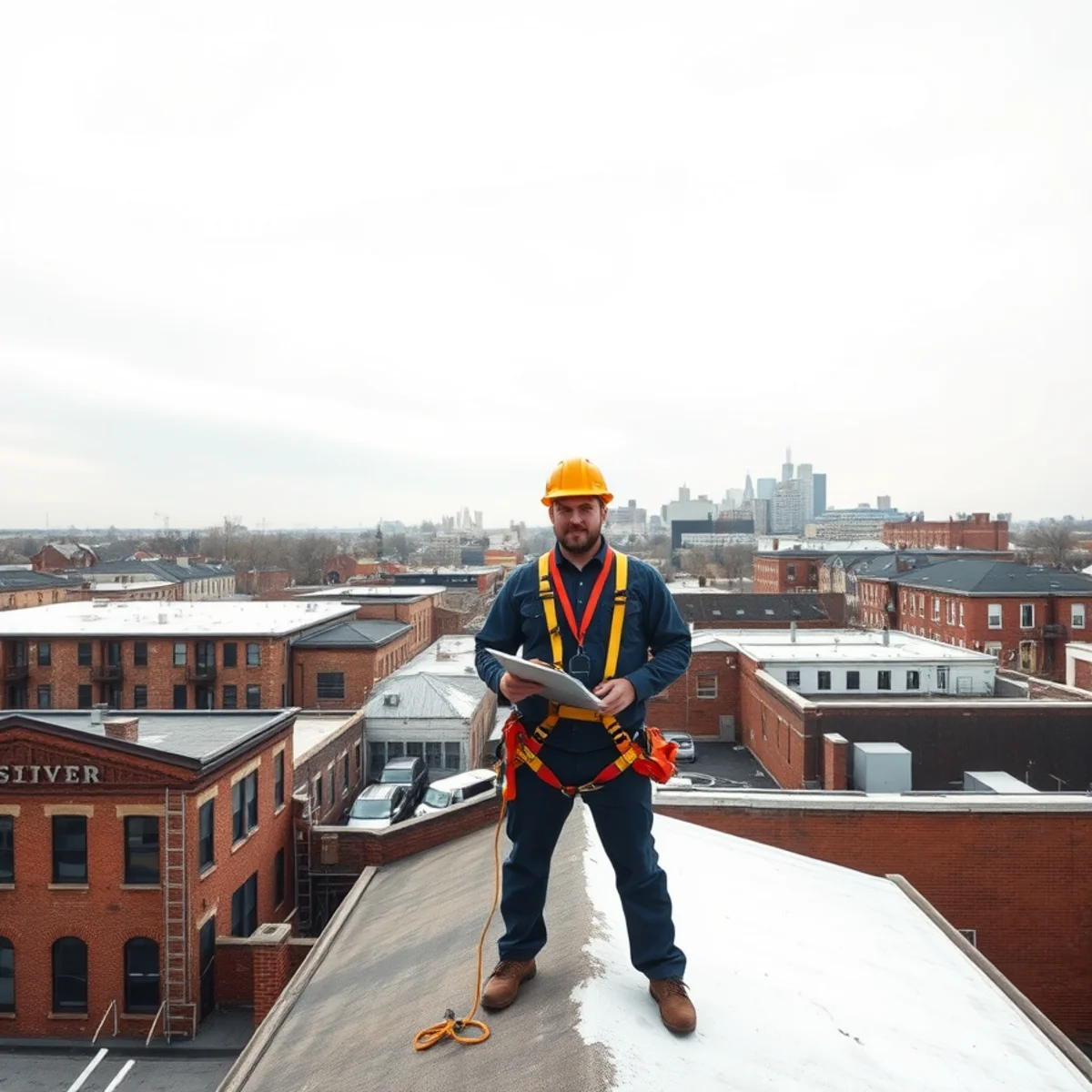
Treat the roof as what it is: a depreciating asset with a knowable service life and a documentable condition. A file per building — system, age, warranty, area, drainage, repair history and a projected replacement year — turns reactive replacement into a sequenced capital plan.
Our shop is on N Cameron Street, in the middle of Harrisburg's industrial and commercial corridor. We look at these buildings every day, and the pattern is consistent: roofs are managed reactively, replaced when they fail, and budgeted for in the year they become an emergency.
There is a better model, and it is not complicated. Treat the roof as what it is — a depreciating asset with a knowable service life and a documentable condition — and manage it accordingly.
What a roof asset file contains
- System type and specification — membrane, thickness, insulation, attachment method, deck type
- Installation date and installer — and whether they are still in business
- Warranty details — holder, term, expiry, and the maintenance conditions attached to it
- Area — measured, not estimated, because every future quote depends on it
- Drainage configuration — internal drains, scuppers, overflows and their locations
- Repair history — every visit, dated, with cost and what was found
- Current condition rating — a simple consistent scale applied the same way every inspection
- Projected replacement year — updated at each inspection as conditions change
Condition rating that is actually useful
You do not need a complicated system. A five-point scale applied consistently will do everything you need.
New or near-new. Good, routine maintenance only. Fair, with defects to monitor and budget for. Poor, requiring significant repair or planned replacement within a few years. Failed, needing replacement now.
What makes it useful is applying it the same way every time and recording why. A roof that moves from Good to Fair between two inspections is telling you something, and the photographs attached to that change are what justify a capital request.
Sequencing replacements across a portfolio
Once you have condition data across several buildings, you can sequence rather than react.
That produces three concrete benefits. You negotiate better pricing, because scheduled work in a contractor's slower season is priced differently from emergency work in October. You spread capital across budget years deliberately. And you stop the pattern where the roof that gets replaced is simply whichever one leaked most recently, regardless of which was in worse condition.
It also lets you group work geographically. Two buildings within a few blocks of each other done in the same mobilization is genuinely cheaper than two separate projects.
The economics of maintenance versus replacement
The core argument for maintenance is that it moves the replacement date. A roof inspected twice a year, with drains cleared and small defects repaired promptly, reaches or exceeds its design life. The same roof unmaintained frequently does not.
Set against an annual maintenance cost, extending a roof's service life by several years is a straightforward return — before you count the leaks that never happened, the tenant claims that never arose, and the warranty that stayed valid.
The failure mode that costs most is wet insulation discovered late. A roof caught early can often be repaired or re-covered. Once moisture has spread through the insulation, the only honest answer is a full tear-off with disposal priced by weight.
Cameron Street corridor specifics
The building stock along this corridor is mixed and mostly older: warehouses, light manufacturing, service buildings, contractor yards and small commercial. A great many are carrying built-up asphalt roofs installed decades ago and coated repeatedly since.
Two things matter here in particular. First, layer count — buildings that have been coated and re-covered several times are frequently at or past what code allows, which means the next roof is a tear-off and should be budgeted as one. Second, drainage: older industrial roofs commonly have interior drains that have not been properly cleared in years.
Both are answerable with a core sample and an afternoon. Neither is answerable by looking at the roof from the parking lot.
Getting started — a practical sequence
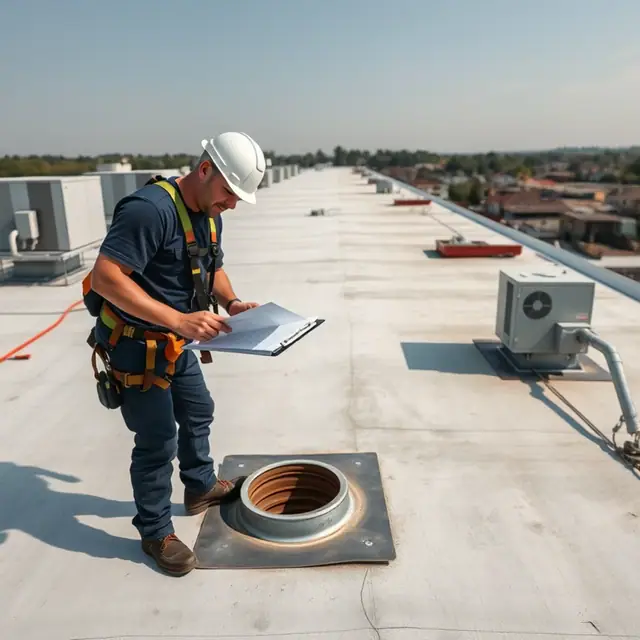
Commission a condition survey
Every roof walked, measured, photographed and cored where warranted. This is the baseline everything else builds on.
Build the file
One record per roof with the fields above. A spreadsheet is entirely sufficient.
Set up scheduled maintenance
Twice yearly plus after significant storms, with written photographic reports that update the file.
Draft a five-year capital plan
Sequence replacements by condition and projected year, grouped geographically where possible.
Review annually
Conditions change, storms happen, and a plan that is not updated is a plan that gets ignored.
Who this is for
If you own one building, this is probably more structure than you need — though a condition survey and a projected replacement year is still worth having.
If you own or manage three or more, the arithmetic changes quickly. The cost of a survey and a maintenance program is small against the cost of one unplanned replacement, and the planning benefit compounds every year you keep the data.
We do this work across the corridor and out to the Lower Swatara logistics buildings. Details on our commercial roofing page.
What to do next
Commission a condition survey across your portfolio, build the file, set up twice-yearly maintenance that updates it, and draft a five-year capital plan sequenced by condition rather than by whichever roof leaked most recently. Then review it annually, because a plan that is never updated is a plan that gets ignored.
If you own one building this is more structure than you need, though a survey and a projected replacement year is still worth having. From three upwards the arithmetic changes quickly. See commercial roofing.
Questions we get about this
What should a roof condition survey include?
Every roof walked, measured and photographed; drains, scuppers and penetrations inventoried; core samples where warranted; and a written report with a consistent condition rating and a projected replacement year. Anything less is an opinion rather than a baseline.
How do I budget for commercial roof replacement?
From condition data rather than from age alone. A projected replacement year per roof, updated at each inspection, lets you sequence work across budget years — and scheduled work in a contractor's quieter season is priced differently from emergency work in October.
Is it cheaper to replace several roofs at once?
Frequently, particularly where the buildings are close together. Two roofs within a few blocks done in the same mobilisation genuinely costs less than two separate projects, which is one of the practical benefits of sequencing from a portfolio file rather than reacting building by building.
Need help with this in Harrisburg?
We are a licensed and insured roofing contractor based at 1000 N Cameron St in Harrisburg. Free inspections, written reports and honest recommendations.
Related services
Areas mentioned