Emergency Guides
Emergency Roof Tarping: How Long Can a Tarp Protect Your Home?
Installed properly, a heavy-duty tarp will protect a Central PA roof for roughly a couple of months. Installed badly, it lasts until the next gust. Here is the difference.
The short answer
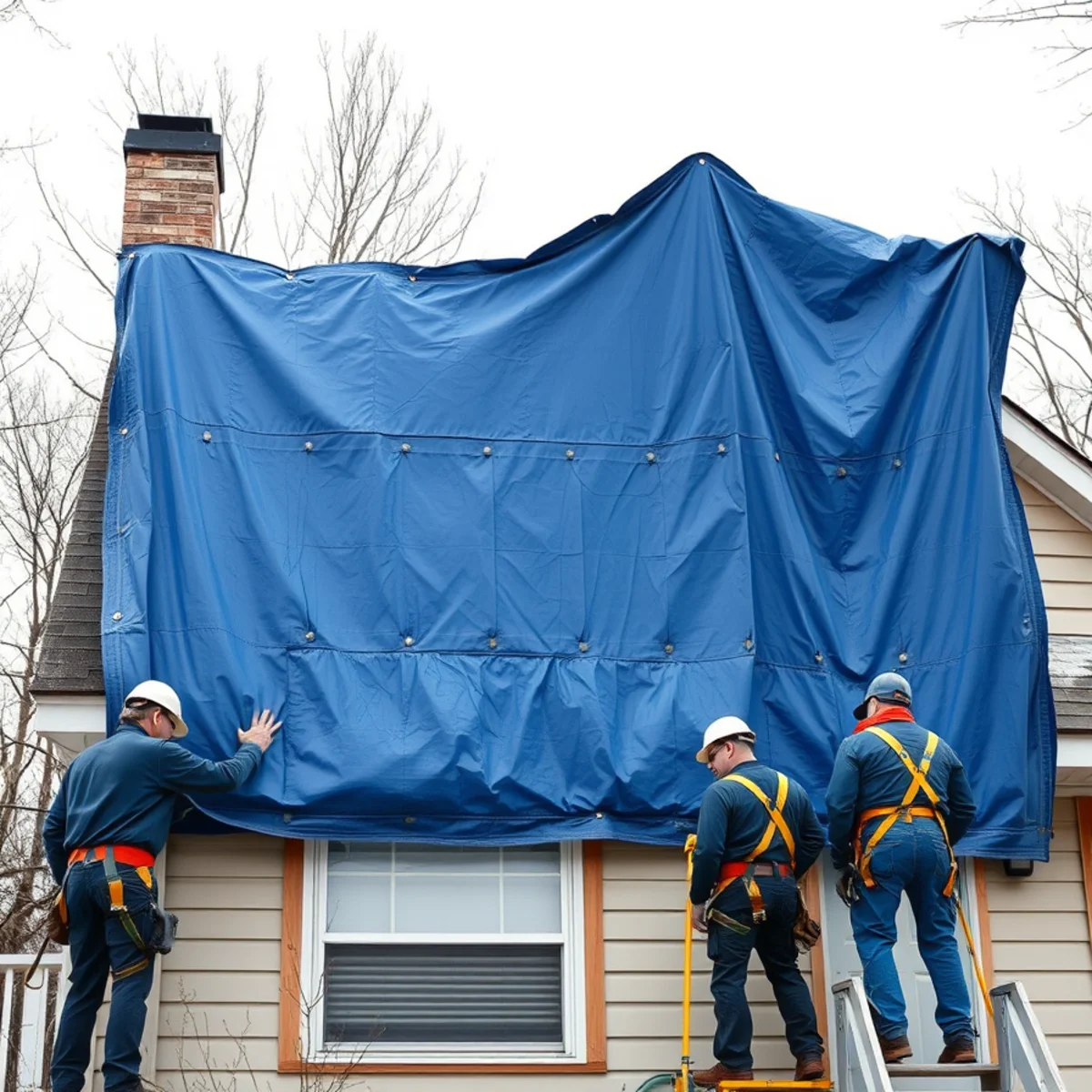
A heavy-duty reinforced tarp, properly battened to furring strips and screwed into framing, will realistically protect a Central Pennsylvania roof for around a couple of months. A hardware-store sheet weighted with bricks may not survive the first windy night. The difference is almost entirely installation rather than material.
Homeowners ask us this constantly after a storm, usually because the permanent repair is waiting on an insurance adjuster, a material order, or a queue that is three weeks deep after a county-wide event.
The honest answer: a heavy-duty reinforced tarp, installed correctly, will realistically protect a roof in Central Pennsylvania weather for something in the range of a couple of months. A hardware-store poly sheet weighted with bricks may not survive the first windy night.
The difference is almost entirely installation. Here is what determines it.
What actually destroys a tarp
- Ultraviolet light. Sun degrades polyethylene continuously. A tarp in full southern exposure will get brittle and start tearing at stress points measurably faster than one on a shaded north slope
- Wind flutter. Any unsecured edge flaps, and flutter fatigues the material and works fasteners loose. This is why battening matters more than anything else
- Freeze-thaw at the fastener holes. Water gets into every screw hole, freezes, expands, and enlarges it. Central PA cycles through freezing dozens of times each winter
- Ponding. A tarp that sags into a low spot holds water, and the weight stretches the material and pulls at the fasteners continuously
- Foot traffic. Every trip onto the tarp to check on it shortens its life. Look from the ground
How a tarp should be installed
There is a right method and it takes about an hour longer than the wrong one.
Size it generously
The tarp must extend well past the damage on every side. Where the roof geometry allows, it should run up and over the ridge so that no top edge faces uphill into running water.
Anchor the high edge under the course above
The top of the tarp gets tucked under the shingle course above the damage so that runoff goes on top of the tarp, never behind it. A tarp that ends mid-slope with an exposed top edge is a funnel pointed at your deck.
Wrap the edges around furring strips
The tarp edge is rolled around a 1x3 strip and the strip is screwed down through the tarp into rafters or solid decking. This spreads the load across the whole edge instead of concentrating it at each fastener, which is what stops the material tearing free.
Use screws with washers, not nails
Screws hold under vibration and can be removed cleanly when the permanent repair happens. Nails work loose and tear the material.
Seal the penetrations
Every screw goes through the roof. Each one gets sealed, because a tarp that leaks at its own fasteners is not doing its job.
Why bricks and sandbags do not work on a pitched roof
Weighting a tarp works on a flat commercial deck in still conditions. On a sloped residential roof in a valley that channels wind, it does not.
Wind does not push a tarp down, it lifts it. Air gets under an unsecured edge, the tarp balloons, and the weights become pendulums swinging on a sheet of plastic. We have taken cinder blocks off gutters, out of flowerbeds and once out of a neighbor's windshield.
If someone offers to tarp your roof with weights, that is a reliable signal about the rest of their work.
Signs your tarp is failing
- Visible flapping or rippling in moderate wind — the fastening has loosened
- Any edge lifted or curled, particularly the uphill edge
- Sagging or a visible pool of water anywhere on the surface
- Chalky, faded or brittle-looking material where sun exposure is heaviest
- New water stains inside, or a stain that has grown since the tarp went on
- Tears radiating from a fastener point
A tarp is a bridge, not a destination
Every week a tarp stays up, the underlayment underneath stays damp, the exposed deck edges wick moisture, and the fastener holes work themselves larger. If the roof beneath the tarp had marginal decking to begin with, an extended tarp period can turn a sheathing repair into a sheathing replacement.
So book the permanent repair while the tarp is going on. If the delay is an insurance adjuster, that is a normal reason to wait and the mitigation cost is generally reimbursable. If the delay is a contractor's schedule, ask for a date in writing.
Our emergency roof tarping service includes removal at no additional charge when we do the permanent work.
The bottom line
A tarp buys you a scheduling window — enough time for an adjuster to visit, for material to arrive, or for a queue to clear after a county-wide storm. It does not buy you a season, and treating it as though it does is how a sheathing repair becomes a sheathing replacement.
If you have a tarp on your roof now, put a date on the permanent repair. Ours includes removing the tarp and sealing every fastener penetration we made — see emergency roof tarping.
Questions we get about this
Does a tarp on the roof affect my home insurance?
Not adversely — mitigating further damage is required of you under most policies, and the tarping cost is generally reimbursable. Keep the itemised invoice and the photographs you took before it went on.
Can a tarp be installed in the rain?
Yes, and it frequently has to be. It is harder and slower, and it is exactly the situation our overnight dispatch exists for. What cannot be done in the rain is a permanent repair — bonding needs a dry surface.
Will tarp screws damage my roof permanently?
No, if it is done properly. We fasten through furring strips into framing with screws and washers, seal every penetration, and remove it all cleanly when the permanent repair happens. Nails and bricks are what leave lasting damage.
Need help with this in Harrisburg?
We are a licensed and insured roofing contractor based at 1000 N Cameron St in Harrisburg. Free inspections, written reports and honest recommendations.
Related services
Areas mentioned