Emergency Guides
Flooding and Your Roof: Lessons From Agnes, Lee & the 1996 Ice Jam
The Susquehanna has shaped Harrisburg's housing more than any architect. What three major floods taught this city — and what it means for your roof.
The short answer
Flooding is not a roofing event, but it shapes the roofs in Harrisburg's river neighbourhoods. Recovery periods produce fast, cheap repairs that show up decades later as tar over slate and aluminium where copper belongs — and on saturated ground, roof water landing at the foundation compounds a problem the house already has.
You cannot understand Harrisburg's housing stock without understanding the river.
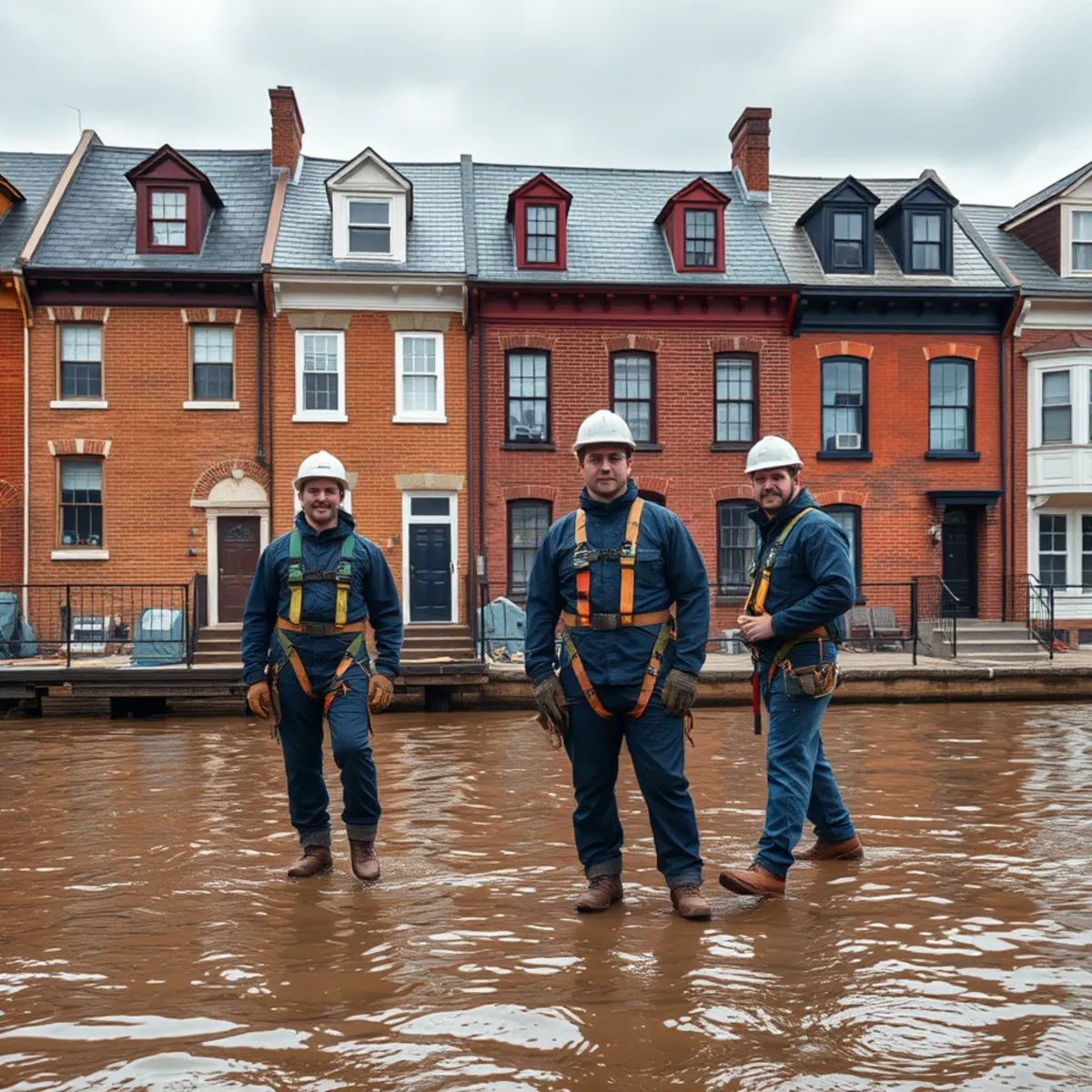
Hurricane Agnes in June 1972 remains the reference point — the flood of record for much of the Susquehanna basin, and the event that determined how thousands of properties along this river were subsequently rebuilt, elevated, insured and, in some cases, demolished. Tropical Storm Lee in September 2011 brought the basin back to major flood stage within living memory for most current homeowners. And the January 1996 ice jam flood — snowmelt and rain against river ice — is the one that reminds everyone that flooding here is not only a summer problem.
None of those are roofing events. But all of them shaped how buildings in Shipoke, along Front Street, in Steelton, Middletown, Dauphin borough and West Fairview were repaired and maintained, and that history is on the roof whether anyone notices it or not.
What flood recovery does to a roof
After a flood, roofing is nobody's priority — correctly so. The water was in the basement and the first floor, the mechanicals are ruined, and the roof looks fine.
But recovery periods produce a specific pattern of roof work. Repairs get done fast and cheap, by whoever is available, often by crews who came in from elsewhere for the recovery and left afterward. Materials get substituted for whatever was in stock. Details get simplified. And because everyone on the block is dealing with the same crisis at the same time, nobody is comparing notes on quality.
Twenty or fifty years later, we open up a Shipoke or Steelton roof and find exactly that: aluminum flashing where copper was, roofing cement where step flashing should be, an asphalt patch across an original slate slope, a membrane terminated with mastic instead of a fastened term bar.
Why roof water matters more on a flood plain
Here is the practical connection between flooding and roofing, and it is the reason this article exists.
A house on low ground near the river is already dealing with high ground water. The soil around the foundation is frequently saturated for extended periods. The basement wall is holding back hydrostatic pressure as a normal condition, not an exceptional one.
Now add a roof. A typical Harrisburg house sheds hundreds of gallons of water during a single significant rain event, and every one of those gallons has to go somewhere. If the downspouts discharge at the foundation — which is how a great many of them are set up — you are concentrating that entire volume against the wall that is already working hardest.
On high ground that is a nuisance. On the river plain it is a meaningful contribution to a chronic problem. Extending downspout discharge six or eight feet from the building, or tying it into working drainage, is one of the cheapest and most useful things we do on a job in these neighborhoods.
The ice jam problem, specifically
The January 1996 event is worth understanding separately because the mechanism is different and the season is unexpected.
Ice forms on the river through a cold period. Then a rapid warm-up combines with rain and snowmelt, breaking the ice into floes that jam at bridges and bends and back the water up behind them. It happens fast and it happens in winter, when a house is already dealing with snow load, ice at the eaves and freeze-thaw stress.
For roofing, the lesson is that January is the month when everything is happening at once in this valley. It is our peak season for roof leak repair calls and for ice dam removal, and it is not a coincidence.
What we look for on flood-history properties
- Substituted materials from a fast recovery — aluminum where copper belongs, asphalt patches on slate, mismatched shingle generations
- Sealant standing in for flashing — roofing cement at masonry intersections that needed metal
- Downspout discharge at the foundation on a lot that cannot afford it
- Additions and alterations made during rebuilds, which frequently intersect the original roof at awkward pitches
- Modified or elevated structures where the roof geometry changed and the tie-ins were improvised
- Original material worth saving — a surprising amount of slate and standing seam survived all three floods and is still serviceable
The good news about these houses
Something worth saying plainly: the historic housing in Harrisburg's river neighborhoods has proven itself. These buildings have been through Agnes, Lee, the ice jam and a century and a half of Central Pennsylvania weather, and they are still here.
The slate on a Shipoke rowhouse has outlasted every asphalt roof installed in this city since. The standing seam on a Dauphin borough porch has done a hundred years of service. That material is not fragile; it has simply been neglected in favor of faster answers during periods when speed mattered more than longevity.
Where the original fabric is sound, restoring it is usually both the cheaper long-term decision and the better one. That is the argument behind our historic and slate roof restoration work, and it applies with particular force in the neighborhoods the river has tested most.
What this means for your roof
If you own in Shipoke, along Front Street, in Steelton, Middletown, Dauphin borough or West Fairview, two things are worth doing. Look at what previous repairs left behind, because recovery-era work substituted materials that are now failing. And get the roof water away from the building, because on this ground it is not a nuisance, it is a contribution.
The good news is that the original fabric on these houses has proven itself through three major floods and a century and a half of Central PA weather. Where it is sound, restoring it beats replacing it — see historic and slate roof restoration.
Questions we get about this
Does homeowners insurance cover flood damage to my roof?
Flood is never covered by a homeowners policy, in Pennsylvania or anywhere else — that requires separate flood insurance. Wind and wind-driven rain during the same storm are covered, which is why separating the two causes with photographs and high-water marks matters so much.
Is it worth restoring a slate roof on a flood-prone house?
Usually yes, and for a practical reason: a house that has been through a flood cannot afford a chronic roof leak drying slowly into its framing on top of everything else. Sound slate with copper flashing is the most reliable roof you can put on a building in that position.
What should I look for on a river-neighbourhood roof?
Substituted materials from a fast recovery — asphalt patches on slate, aluminium where copper belongs, roofing cement at masonry intersections — and where the downspouts discharge. Those four things account for most of what we find on these houses.
Need help with this in Harrisburg?
We are a licensed and insured roofing contractor based at 1000 N Cameron St in Harrisburg. Free inspections, written reports and honest recommendations.
Related services
Areas mentioned