Cost & Insurance
Slate Roof Repair vs. Replacement: A Cost Breakdown
Most Harrisburg slate roofs that get torn off did not need to be. Here is the test for whether yours is finished — and the fifty-year math nobody runs.
The short answer
Tap a few slates. A sound one rings; a delaminated one sounds dull and flat. If most of yours ring, the roof is not finished — it has probably lost its fasteners rather than its material, and that is a repair project with decades of service left in it.
Someone has told you your slate roof needs replacing. Before you believe it, do this one test.
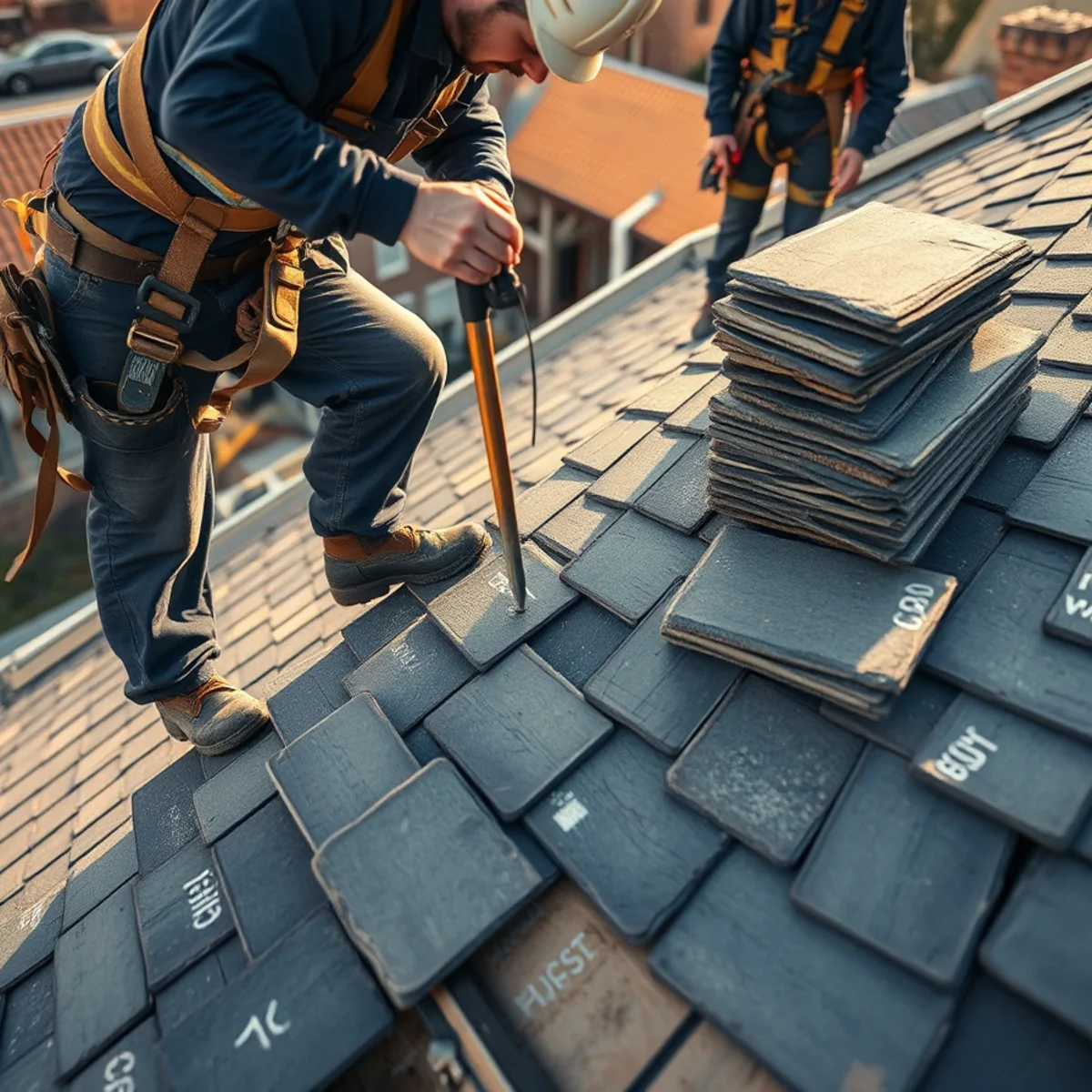
Get up to the roof, or have someone do it, and tap a few slates with a knuckle or the handle of a screwdriver. A sound slate rings — a clear, hard, almost ceramic note. A slate that has delaminated internally sounds dull and flat, like tapping a piece of cardboard.
If most of your slates ring, your roof is not finished. It may need considerable work. It does not need throwing away.
The most common misdiagnosis: nail sickness
The condition that puts most Harrisburg slate roofs at risk of unnecessary replacement is nail sickness, and it is entirely a fastener problem.
Original slate was hung with iron or steel nails. Over a century, those nails corrode. Eventually they fail, and the slate — which is completely sound — slides off the roof and lands in the yard. Homeowners find intact slates on the lawn after every windstorm and reasonably conclude the roof is dying.
It is not. The roof is losing its fasteners. That is a repair project — sometimes a large one, addressed slope by slope — and the slate itself has decades of service left.
When repair is right
- Most slates ring when tapped — the material is sound
- Failures are localized or clearly follow a valley, chimney or a specific slope
- The framing is sound — no dishing or sagging between rafters
- Damage is from a specific event — a limb strike, a failed valley
- Previous bad repairs are the actual problem — tar, face nails, asphalt patches that can be undone
When replacement is genuinely the answer
- A majority of slates are delaminating — dull when tapped, flaking at the edges, soft at the corners
- The framing cannot carry the load — slate is heavy and some roofs were compromised by a previous second layer
- The slate was a low-grade product to begin with — not all slate was Pennsylvania Peach Bottom; some early-century imports had a much shorter service life
- Repair cost across the whole roof approaches replacement — at which point you are choosing between two capital projects
What each option actually involves
| Targeted repair | Full slate replacement | Replacement with asphalt | |
|---|---|---|---|
| Typical scope | Re-hang slipped slates, rebuild valleys and flashing | Strip, salvage, re-deck as needed, re-lay in slate | Strip slate, deck repair, architectural shingle |
| Cost level | Lowest | Highest | Middle |
| Service life gained | Decades, if the slate is sound | A century or more | Twenty to thirty years |
| Effect on the house | Preserves original material | Preserves character | Permanent loss of original fabric |
| Historic district | Generally straightforward | Generally approved | May not be permitted |
The fifty-year math nobody runs
This is the argument that changes minds, and it is arithmetic rather than sentiment.
An asphalt replacement is cheaper than a slate replacement today. But asphalt gives you twenty to thirty years, so across the next fifty you are buying two of them — two tear-offs, two disposals, two full staging setups on a steep Victorian roof, at whatever labor rates exist in 2050.
A properly restored slate roof with copper flashing and stainless or copper fasteners is a multi-generational roof. Over the same fifty years you are looking at periodic maintenance rather than replacement.
Add the resale factor. In Olde Uptown, Bellevue Park and Midtown, original slate is part of what buyers are paying for. Asphalt on a Victorian in a preservation-minded neighborhood is a discount at sale.
What drives slate repair cost
- Pitch and access — most Harrisburg slate sits on steep Victorian roofs needing jacks and staging before anything else happens
- Number of separate setups — twelve slates in one area is one setup; twelve across four elevations is four
- Flashing scope — copper valley rebuilds require carefully removing and re-hanging dozens of surrounding slates by hand
- Material matching — common Pennsylvania grey-black is straightforward; unusual sizes, thicknesses or colored slates take sourcing
- Undoing previous repairs — removing hardened roofing cement without breaking the surrounding slates is slow, careful work
Getting an honest assessment
Ask any contractor assessing your slate roof three questions. Did you sound the slates, or judge from the ground? What proportion are delaminating versus sound? And can you show me photographs of the fasteners?
A contractor who cannot answer those has not assessed your roof. Our slate roof repair service produces a written condition report with photographs, whichever way the recommendation goes.
The bottom line
Nail sickness is the condition most often misdiagnosed as a dead slate roof in Harrisburg. The slate is fine; the century-old iron nails holding it are not. That is a systematic re-hang, and it is dramatically cheaper than replacement while leaving you with a roof that outlives two asphalt cycles.
Before accepting any tear-off recommendation, ask three questions: did you sound the slates, what proportion are delaminating, and can you show me photographs of the fasteners. A contractor who cannot answer has not assessed your roof — see slate roof repair.
Questions we get about this
How much does slate roof repair cost compared with replacement?
Targeted repair is a fraction of replacement, and even a whole-slope re-hang generally sits well below a full tear-off in slate. The variables are pitch and access, the number of separate setups, how much copper flashing is in scope, and how difficult the material is to match.
Can I put asphalt shingles on a slate roof house?
Physically yes, and outside a regulated district it is your decision. Understand what you give up: resale appeal in a preservation-minded neighbourhood, the original fabric of the building, and a roof that would have lasted generations more.
How long does a restored slate roof last?
Pennsylvania slate commonly serves a century or more. Restored with copper flashing and copper or stainless fasteners, a sound slate roof is realistically multi-generational rather than a thirty-year asset.
Need help with this in Harrisburg?
We are a licensed and insured roofing contractor based at 1000 N Cameron St in Harrisburg. Free inspections, written reports and honest recommendations.
Related services
Areas mentioned